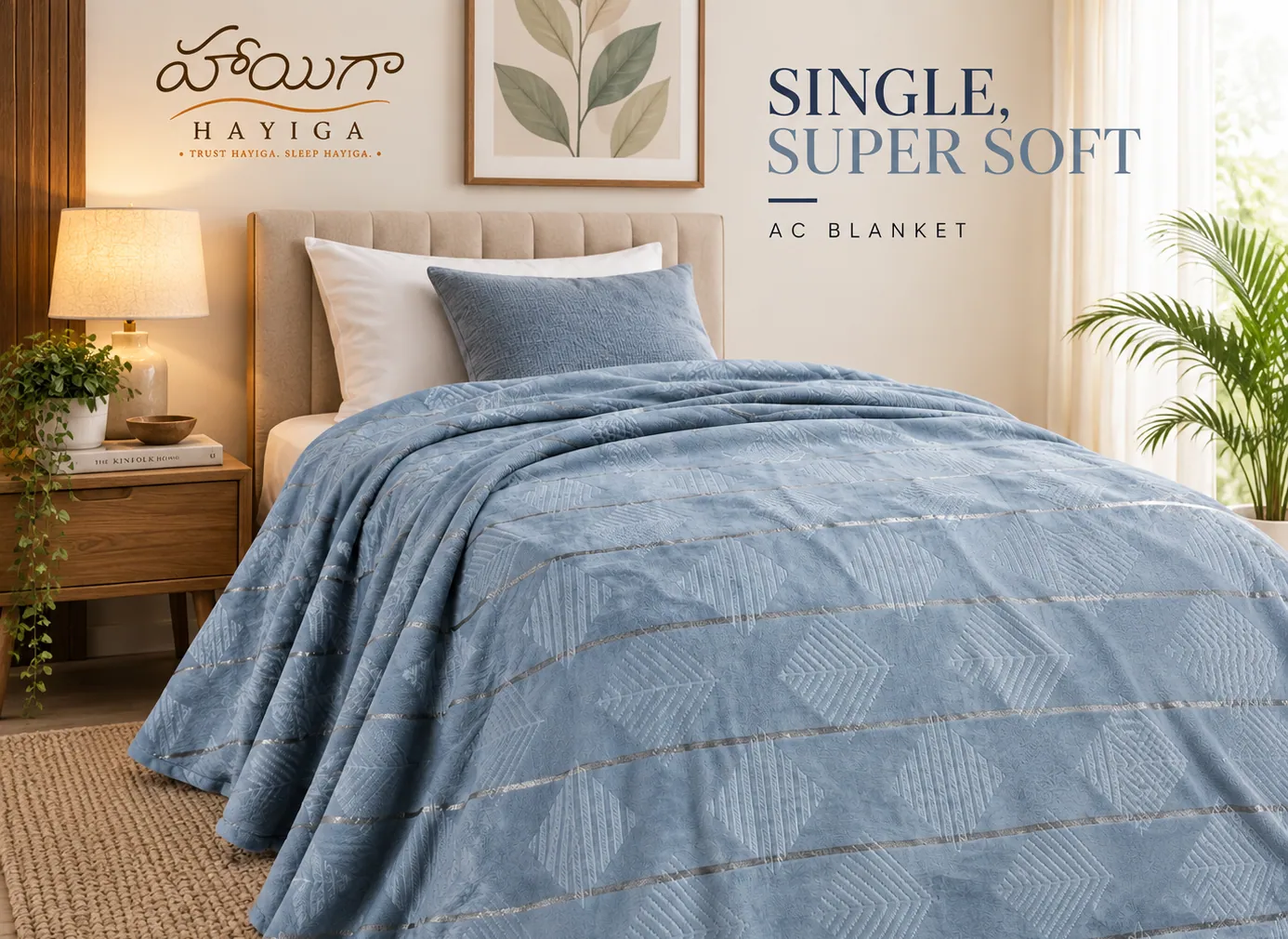
What size AC blanket do I need for a double bed?
For two people on a double or queen bed, look for an AC blanket about 90 inches wide and 90 to 100 inches long. For one person, a single of about 60 by 90 inches is usually enough.
These are common sizes, not fixed ones, so read the measurements for each product. Compare the width with your mattress: about 48 inches for a double, 60 for a queen and 72 for a king. A light blanket moves easily, so it needs a good overhang. Eight to ten inches a side is a comfortable minimum, and more is better if either sleeper turns a lot.
Length matters in a cooled room, because cold air settles around the feet. The blanket should cover you from the shoulders to past the toes, with some spare to fold under. For a king bed shared by two, a double may run short on width. A larger size or two singles will serve better.
AC blanket vs comforter: which one do you need?
Pick an AC blanket if you only need to take the edge off cooled air, and a comforter if your room is kept cold enough to feel like winter. The difference between them is the filling.
An AC blanket is a single thin layer or a few thin layers of cloth. It holds only a little warmth, and if you get warm you can push it down easily. A comforter has fibre filling that traps much more air. Even a light one is noticeably warmer and bulkier.
A simple test is how you sleep now. If you wake up cold under a bedsheet but kick off a thick cover, the lighter blanket is your answer. If you still feel cold under a light blanket with the AC at your usual setting, a light comforter may suit you. Many homes keep both, the blanket for most nights and the comforter for the coldest setting.
What does the weight or GSM on a blanket label mean?
GSM on a blanket label is the weight of the fabric in grams per square metre, and a lower figure means a lighter, thinner blanket. It is a quick way to compare two blankets of the same material.
It only works within one kind of fabric. A fleece blanket and a cotton blanket with the same GSM will not feel equally warm, because fleece is fluffy and holds more air for its weight. So compare fleece with fleece and cotton with cotton.
Some labels give the total weight of the blanket in grams or kilograms. To compare such figures, look at the size as well, since a bigger blanket naturally weighs more. Many listings give no number at all and just say lightweight or all-season. In that case the fabric, the number of layers and the description of thickness are your guide. Numbers vary by maker, so treat them as a rough pointer.
Why does a fleece blanket shed fluff or form bobbles?
A fleece blanket sheds or forms bobbles because its surface is made of tiny raised fibres, and rubbing loosens some of them. The loose ends then roll into small balls. This is called pilling.
A little shedding in the first wash or two is normal for a new fleece or flannel blanket. It is leftover fibre from the brushing done in the factory. Wash the blanket alone the first time so the fluff does not settle on other clothes, and clean the lint filter of the machine afterwards.
Bobbles come with wear, most of all where the blanket rubs against rough things. Washing it with towels, jeans or anything with hooks and zips makes it worse. Use a gentle cycle and cool water, and turn it inside out if it has a clear face side. Bobbles that have formed can be picked off or removed with a fabric shaver. They change the look, not the use.
How to wash an AC blanket so it stays soft
To keep an AC blanket soft, wash it in cool water on a gentle cycle with a small amount of mild detergent, and dry it without strong heat. Heat and too much detergent are the two things that roughen it.
Read the care label first, since cotton and fleece blankets are not treated alike. For fleece, hot water and a hot dryer can make the soft fibres go hard and matted, and that does not come back. Dry it on a line in shade. It dries fast. For cotton, a good shake before hanging and again when half dry keeps it from going stiff.
Too much detergent leaves a film that makes any blanket feel harsh. Use less than you would for a load of clothes, and add an extra rinse. Do not overload the drum. The blanket should have room to turn freely. Fold it only when it is fully dry, which in the monsoon may need a few hours under a fan.
Is an AC blanket the same as a summer blanket or a throw?
An AC blanket and a summer blanket are the same idea under two names, while a throw is a smaller piece meant mainly for a sofa or chair. Shops choose the name. The cloth and the size are what count.
Summer blanket, AC blanket, light blanket and all-season blanket are all used for thin covers that suit a cooled room or a mild night. None of these names has a fixed meaning, so two products with the same name can differ a lot in thickness.
A throw is often around 50 by 60 inches, though sizes vary. That is enough to cover your legs while sitting, but too short and narrow for most adults to sleep under. In a photo a throw is easy to mistake for a full blanket. Before choosing, compare the length with your height. A blanket for sleeping should be clearly longer than you are, with spare width to wrap around the shoulders.