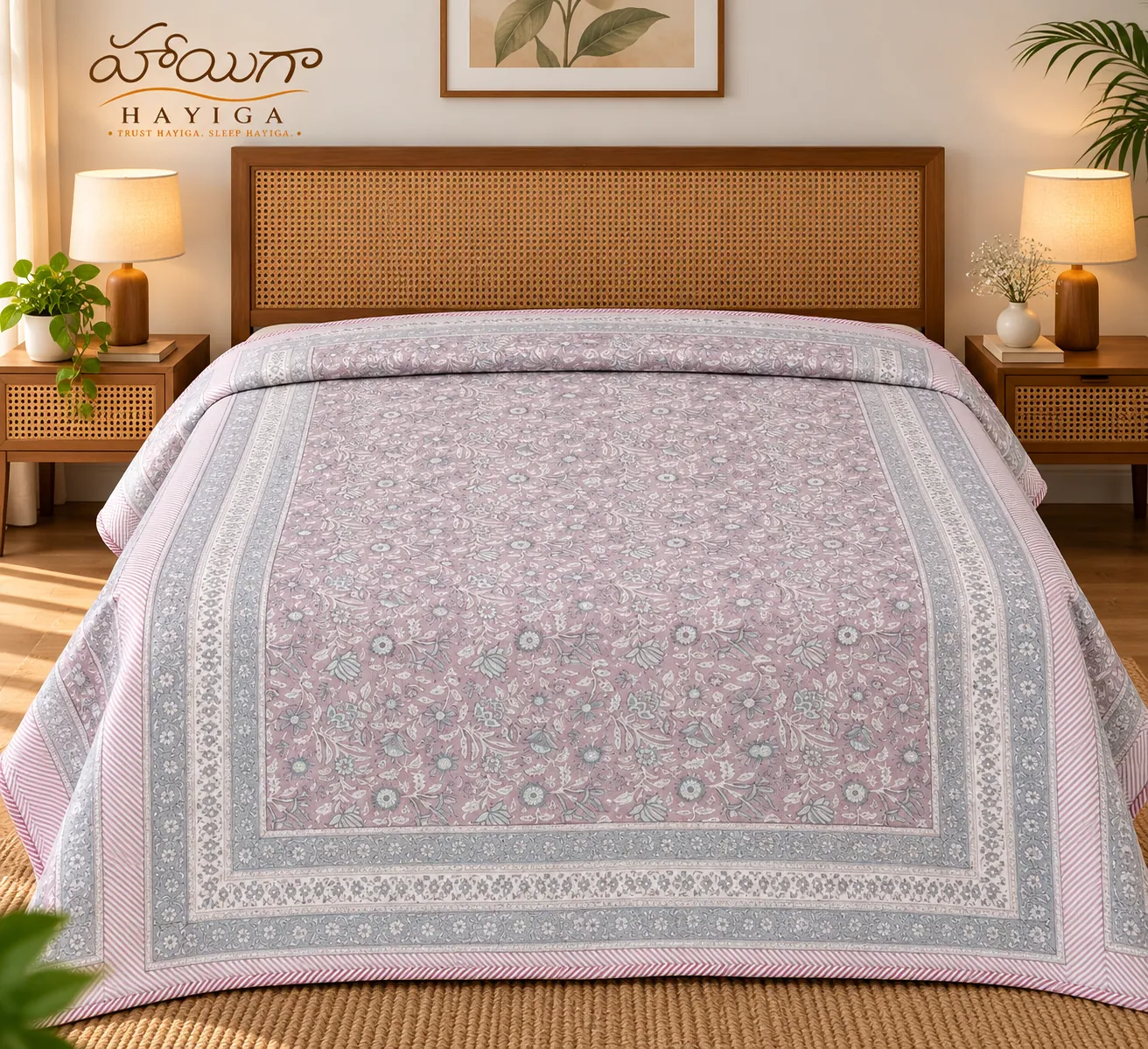
How thick or heavy should a dohar be?
A dohar should be light enough to feel airy on the body and just thick enough to take away the chill of a fan or an AC. If it feels like a heavy blanket, it is doing a different job.
There is no single correct weight, because rooms and people differ. A person who sleeps warm, or who uses only a fan, will be happy with a thin, soft dohar. A person who keeps the AC cold, or feels cold easily, may want a slightly fuller one with a thicker middle layer.
When you shop, look at how the dohar folds. A light one folds into a small, soft pile and falls easily over your hand. A thicker one stands up a little and holds its shape. Some listings give the weight or the GSM of the cloth. Use these numbers only to compare similar products, and check the product's details instead of guessing.
If you are choosing between two, the lighter one is usually useful for more months of the year.
Dohar or blanket: which one is better for you?
A dohar is better when you need a light, breathable cover for mild nights or an AC room, and a blanket is better when you need real warmth in cold weather. They are made for different jobs, so many homes keep both.
A dohar is made of layers of light fabric, often cotton. It lets air pass and does not trap much heat. A blanket is usually a single thicker layer, and many are made of fleece, wool or synthetic fibres that hold warmth close to the body.
Think about your coldest and your most common night. If most of your year is warm, with a few cool weeks, a dohar will be used far more often. If your winters are properly cold, a dohar alone may not be enough on those nights.
Washing is another difference. A light cotton dohar is usually easier to wash and dry at home than a thick blanket. Always follow the care label on the product.
How to choose a dohar that stays soft after many washes
To choose a dohar that stays soft, look for natural, breathable fabric in the layers, even stitching that holds the layers together, and care instructions you can truly follow at home. Softness that lasts comes from the cloth and from gentle washing, not from a finish applied at the factory.
Fine cotton fabrics, such as the light cloth often used in dohars, usually grow softer with washing as the fibres relax. A fabric that feels very silky in the shop because of a coating can lose that feel after a few washes.
Stitching matters for softness too. If the layers are held only at the edges, they can shift and bunch up in the wash, and the dohar starts to feel lumpy. Lines of stitching across the body keep the layers flat.
Then there is your part. Mild detergent, cool water and drying in shade help any dohar keep its feel. Check the care label before you buy, so you know what the product needs.
How to check the quality of a dohar before buying
Check the quality of a dohar by looking at its edges, its stitching, the evenness of its layers and the clarity of the print. A few minutes of looking closely tells you more than the name on the packet.
Start at the border. The edge should be neatly finished, often with piping or a folded hem, and the corners should be flat and firmly stitched. Loose threads at the corners are an early sign of weak finishing.
Next, spread the dohar and run your hand over it. The surface should feel even all over, with no thick lumps and no empty patches. Hold a part of it up to the light. The layers should lie together without gaps or folds inside.
Look at the print on both sides. Colours should be clear and should not rub off on your fingers.
When you are buying online, you cannot do these checks by hand. Read the description for the number of layers and the fabric of each, and look at the close-up photos of the edges.
How to use a dohar with a bedsheet, quilt or comforter
A dohar works well as the middle or top layer of the bed: over a top sheet in warm months, and under a quilt or comforter when nights turn cold. Using layers lets you adjust the bed without buying a cover for every kind of weather.
In summer and in an AC room, many people sleep under the dohar alone. Some keep a thin top sheet between the body and the dohar. The sheet takes the sweat and is washed often, so the dohar stays fresh for longer.
In cooler months, keep the dohar next to the body and add a warmer layer on top. Air held between the layers adds warmth, and you can push the top layer aside if you feel hot at night.
In the daytime, a neatly folded dohar at the foot of the bed looks tidy and is ready for an afternoon nap.
When you choose a dohar, think about which of these uses you want. It helps you decide on the weight and the size.
How many dohars does a family need?
Most families are comfortable with one dohar for each person who sleeps in the home, plus one or two spare. The spare covers washing days, the monsoon and guests.
Sharing sounds simple, but it often fails in practice. One person feels warm, the other feels cold, and the dohar gets pulled through the night. This is why many couples keep two single dohars on a double bed instead of one large one. Each person can then cover up or stay open as they like.
Children's dohars are washed more often, so a spare for them is useful. In humid months a washed dohar can take more than a day to dry, and a spare means nobody goes without a cover.
You do not have to buy them all together. Start with the ones needed every night, use them for a few weeks, and then add spares in the weight and size your family liked most.