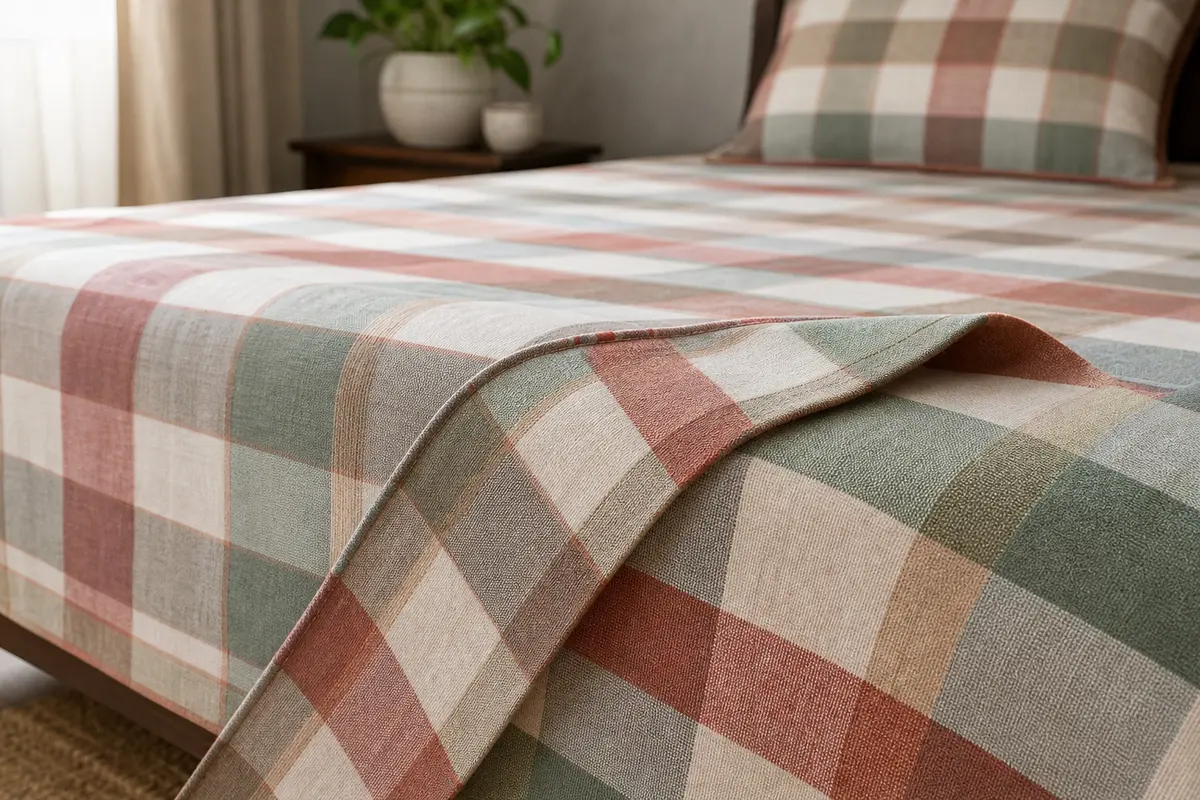
The layer you sleep on, and the two kinds it comes in.
01The short answer
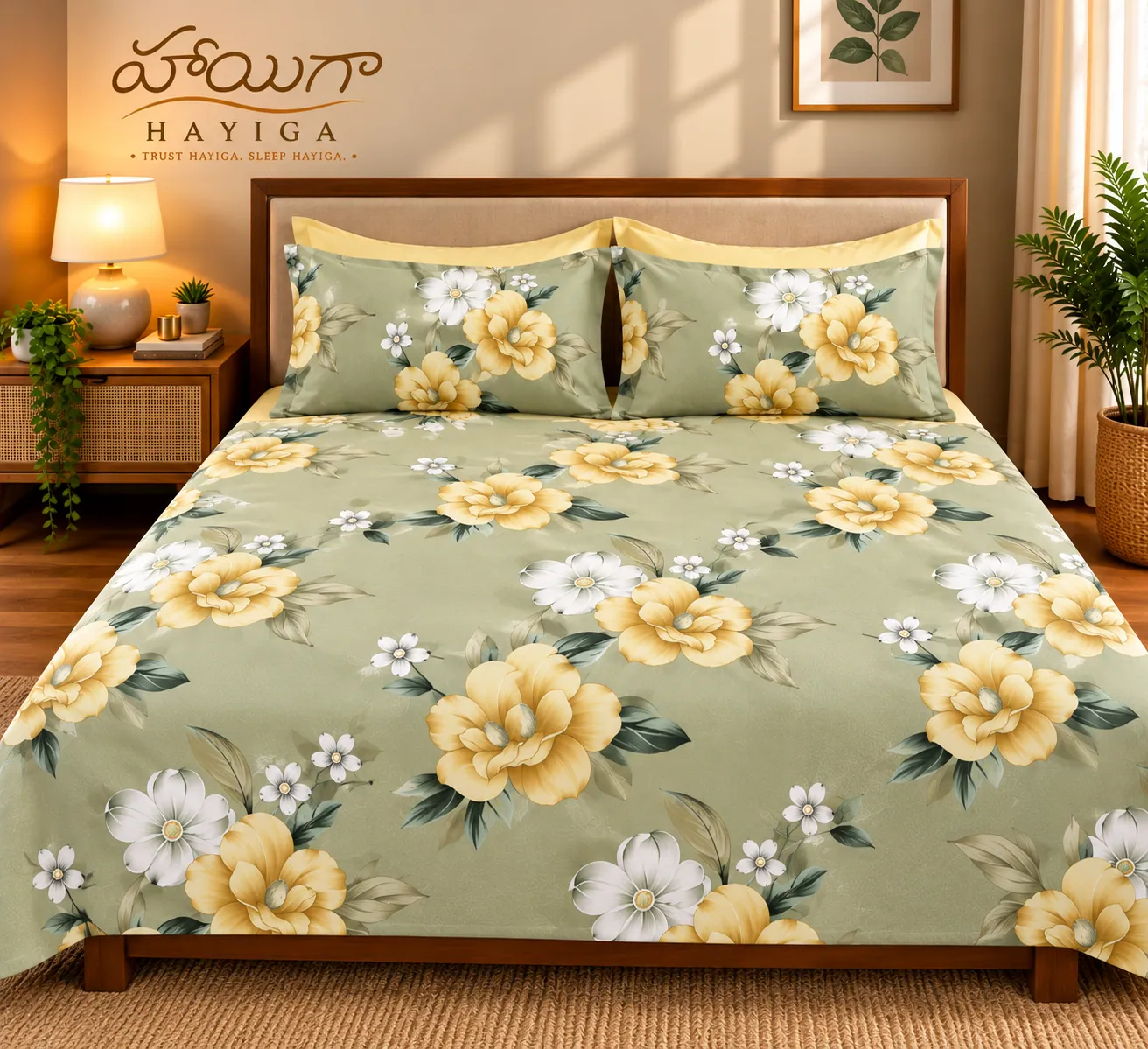
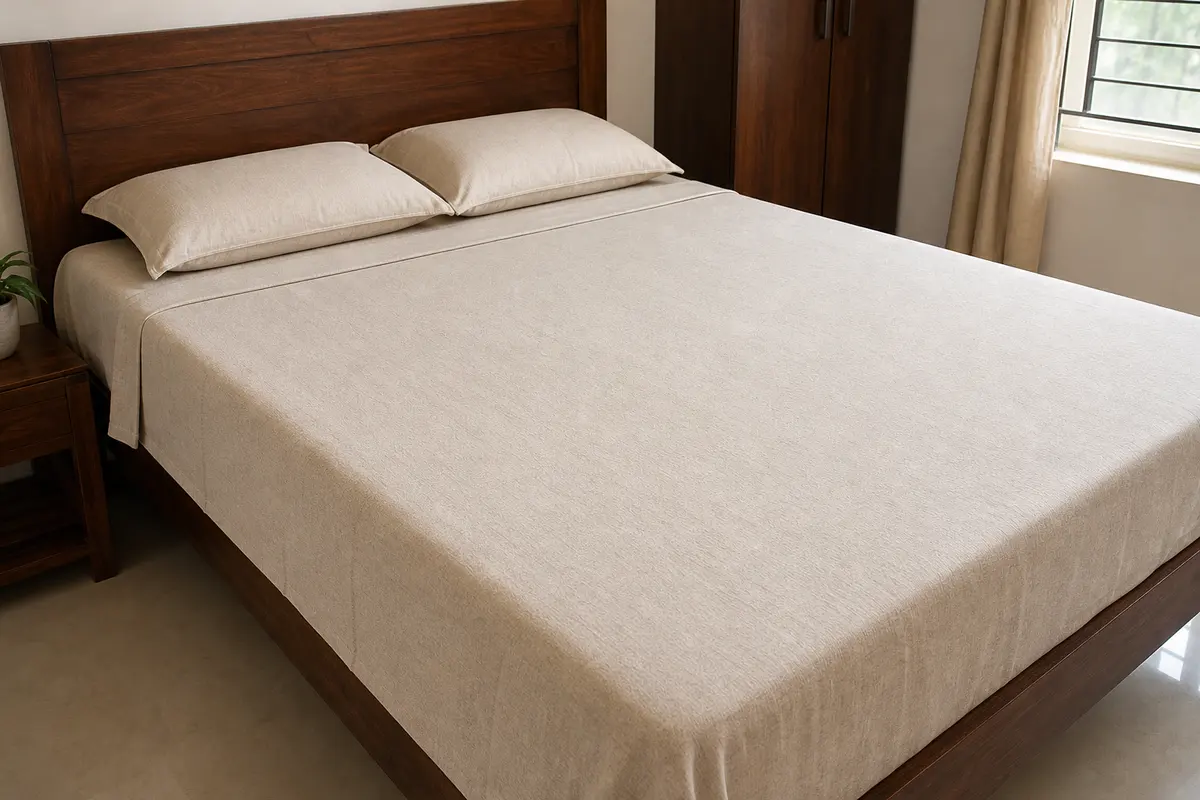
A bedsheet is the piece of fabric that covers your mattress and that you sleep on directly. It keeps the mattress clean and gives you a smooth, comfortable surface against the skin. Bedsheets come in two kinds. A flat bedsheet is a plain rectangle that you tuck under the mattress by hand. A fitted bedsheet has elastic that grips the mattress. In most Indian homes the bedsheet is used every day of the year and is often sold with matching pillow covers. How it feels depends mostly on the fabric and the weave.
02How is it different?
How it differs from a fitted bedsheet
Bedsheet
Fitted bedsheet
Shape
Flat rectangle, tucked in by hand
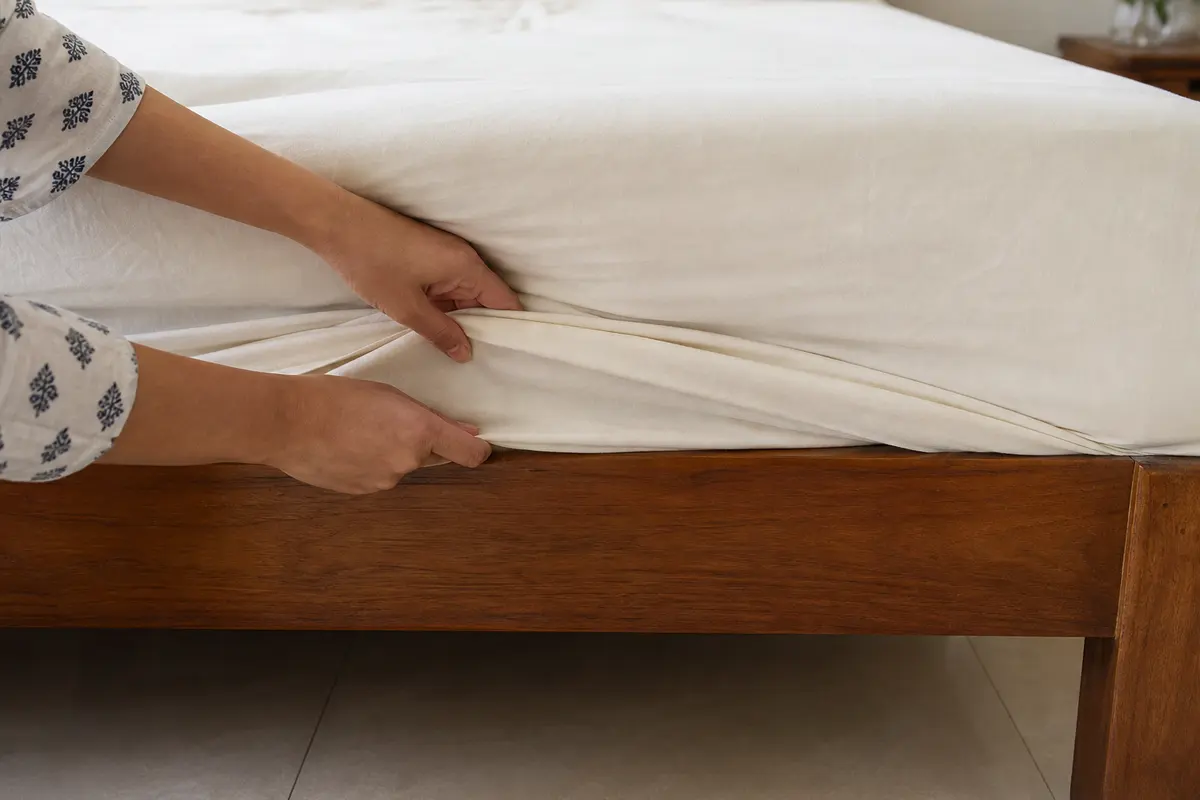
Elastic edges that grip the mattress
Fit
One sheet can suit several mattress sizes
Made for one mattress size and depth
03Bedsheet: all you need to know
What is a bedsheet in simple words, and what are its parts?
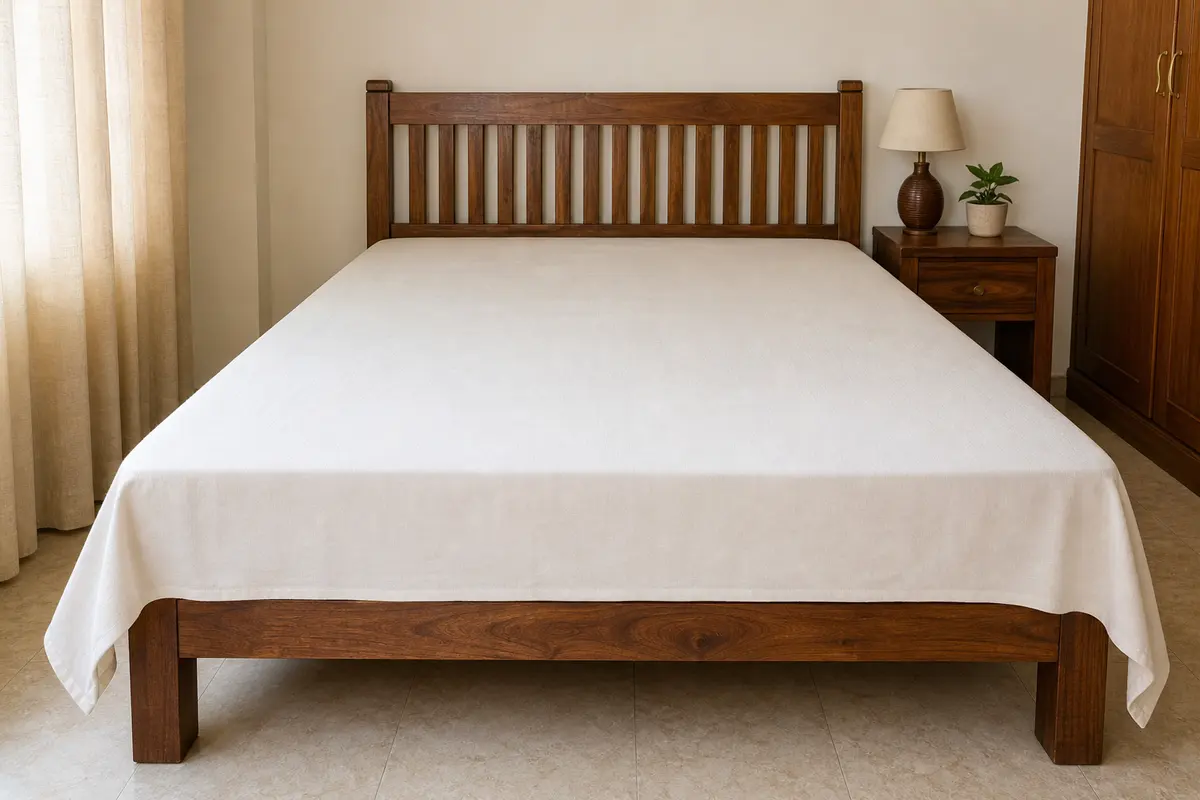
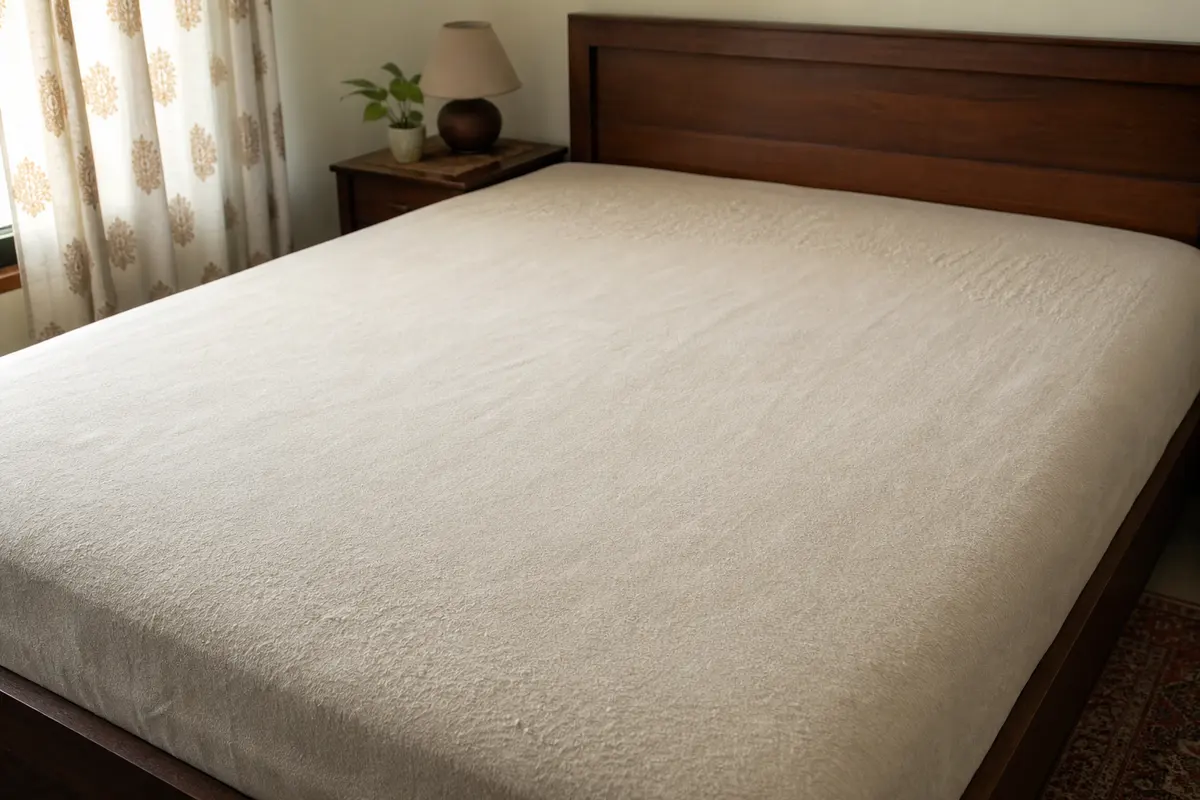
A bedsheet is a large rectangle of woven cloth that is spread over the mattress, so that you lie on cloth and not on the mattress. It has very few parts, but knowing them helps when you read a label or check the stitching.
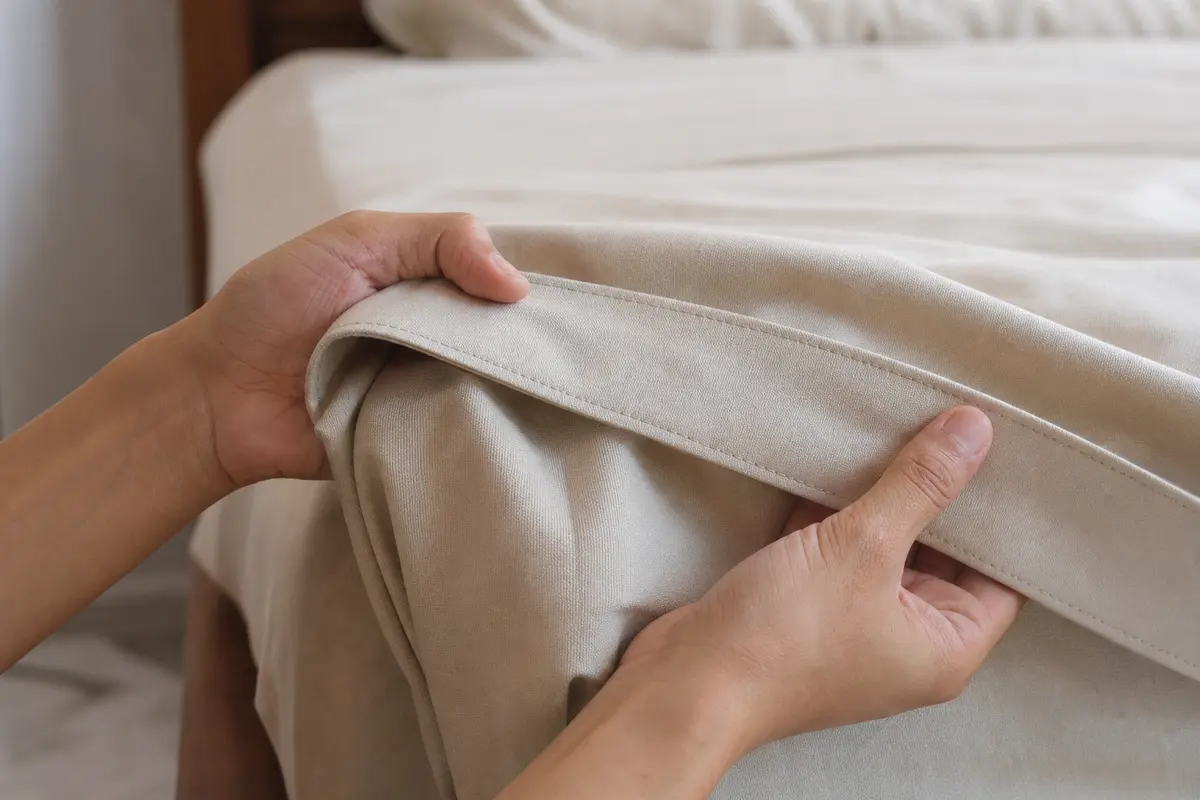
The folded and stitched border is called the hem. A wide hem at one end usually marks the head side. The firm woven edge that runs along the length of the cloth is the selvedge. It stops the fabric from fraying, so some sheets have a hem on only two sides.
Every sheet also has a face and a back. On a printed sheet the face is brighter and the print looks sharper. On a plain sheet both sides may look almost the same. Lay the sheet face up, with the wide hem towards the pillows, and it will look the way the maker intended.
Bedsheet, bed linen and bedding: what is the difference?
A bedsheet is one item, bed linen is the group of washable cloth pieces on a bed, and bedding is everything that goes on top of the mattress. Shops use the three words loosely, which confuses many buyers.
Bed linen normally means bedsheets and pillow covers, and sometimes a duvet cover. The word comes from the time when such pieces were woven from linen, a fibre made from the flax plant. Today most bed linen in India is cotton or a blend, but the old name has stayed.
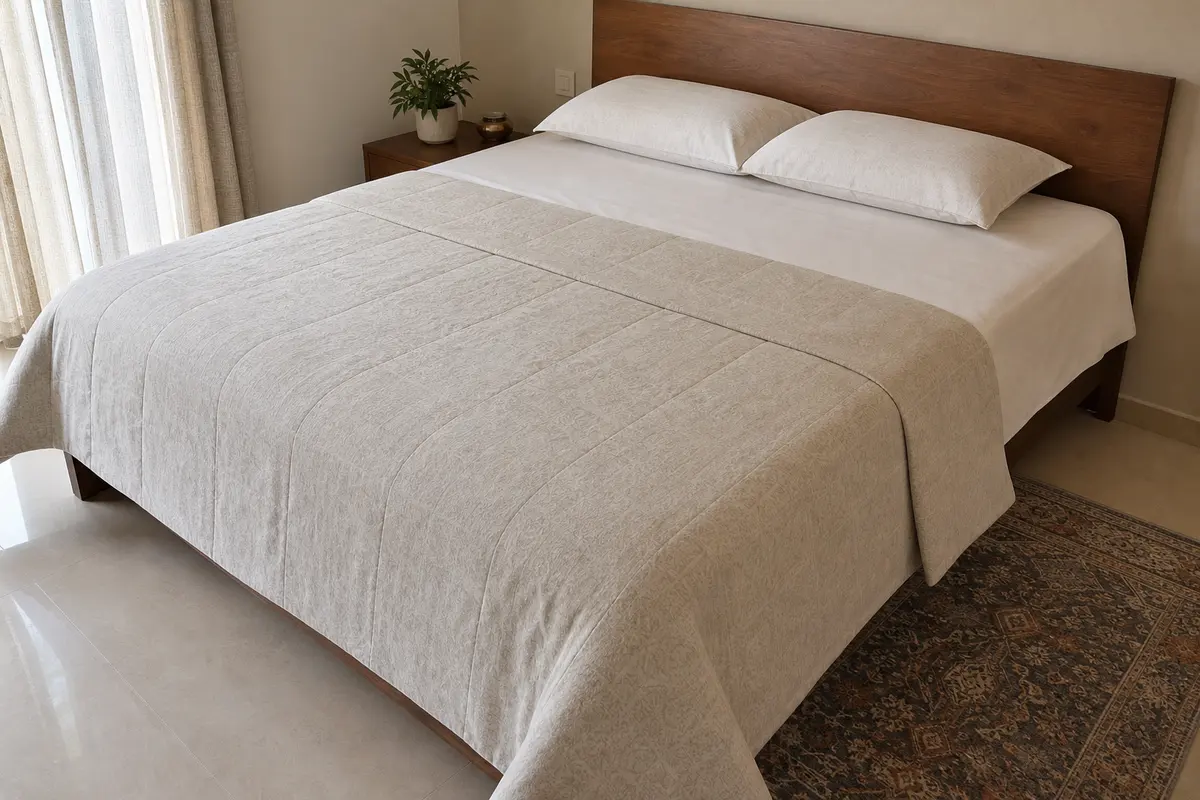
Bedding is the widest word. It includes the linen and also the covers you sleep under, such as a dohar, quilt, blanket or comforter, along with pillows. So if a listing says bed linen set, expect sheets and pillow covers. If it says bedding, read the list of pieces, because it may or may not include a top cover.
What is a top sheet, and do Indian homes need one?
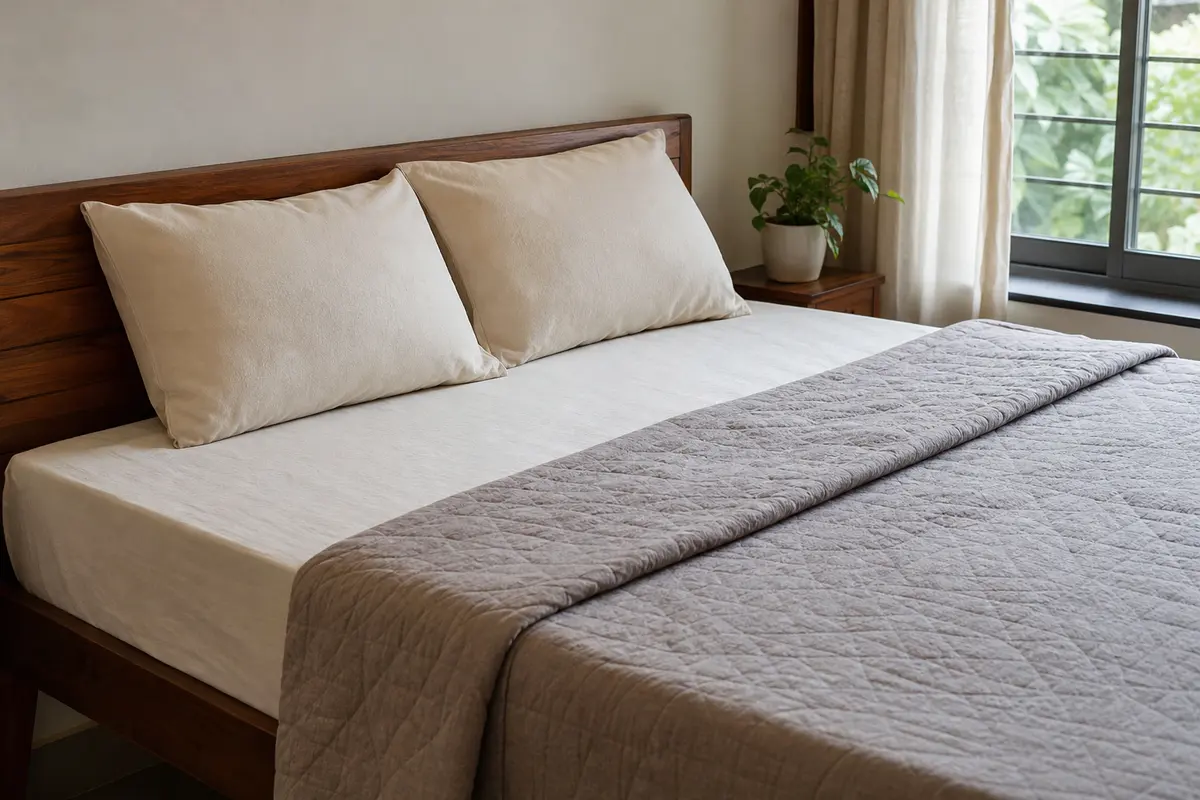
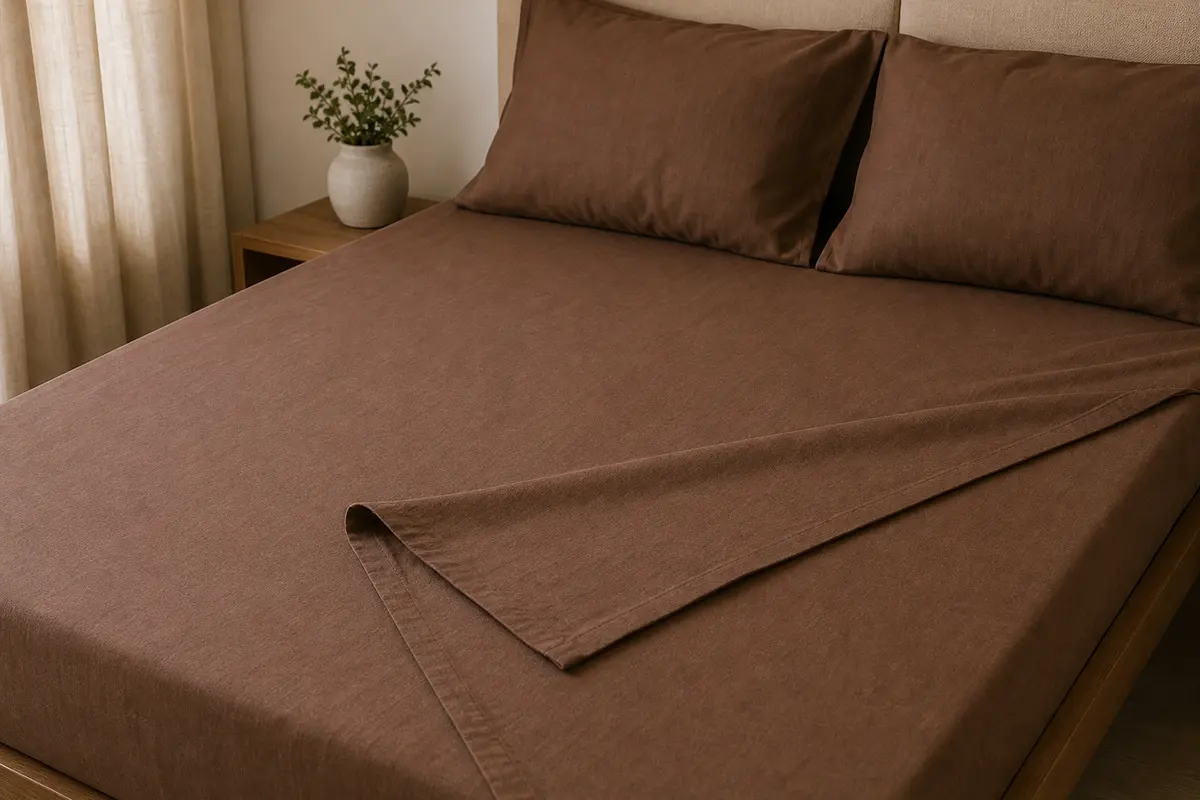
A top sheet is a second flat sheet that lies between you and your blanket or comforter. It is not a different product. Any flat bedsheet of the right size can do this job.
Its main use is to keep the heavier cover clean. Sweat and body oil reach the thin sheet first, and a sheet is far easier to wash and dry than a quilt, especially in the monsoon when thick pieces take days to dry. In peak summer many people push the blanket away and sleep under the top sheet alone.
Many Indian homes skip it, and that is fine. It is most useful if your top cover is bulky, cannot be machine washed, or is shared by guests. If you try it, choose a sheet wide enough to hang over both sides, so it does not get pulled off when one person turns.
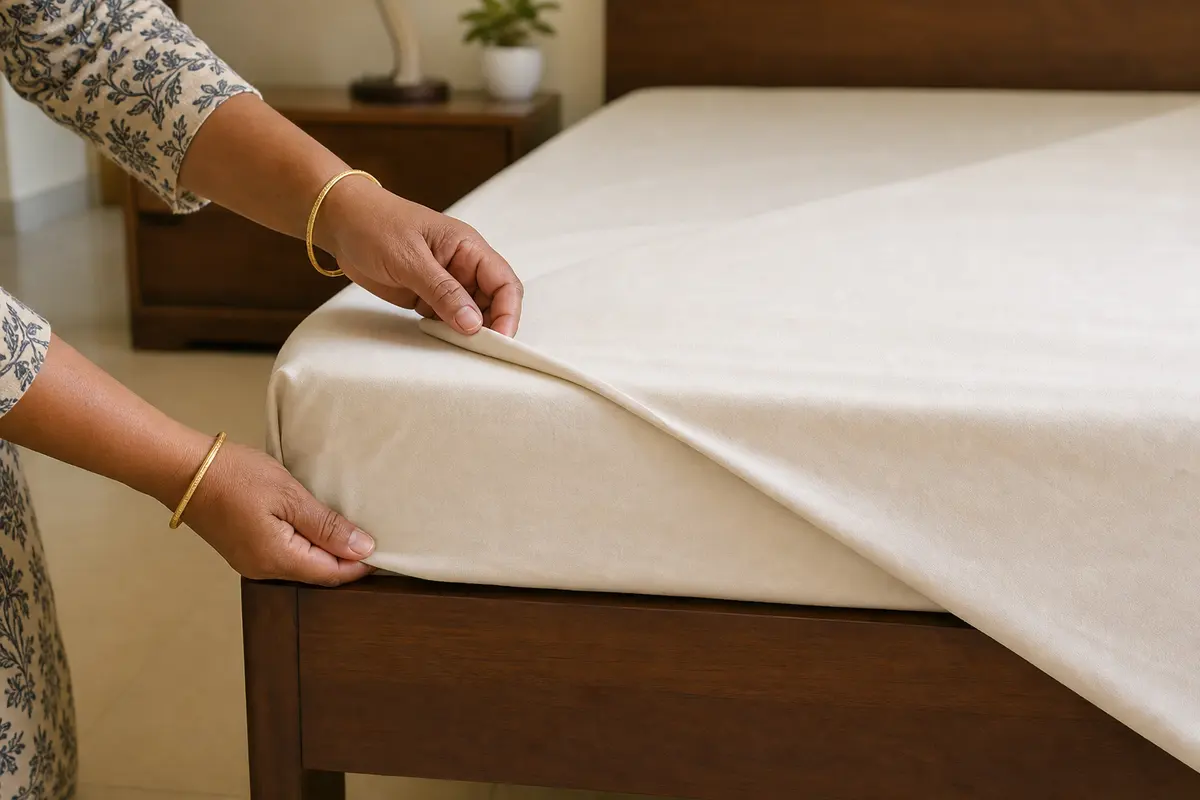
How to tuck a flat sheet so it stays in place on the bed
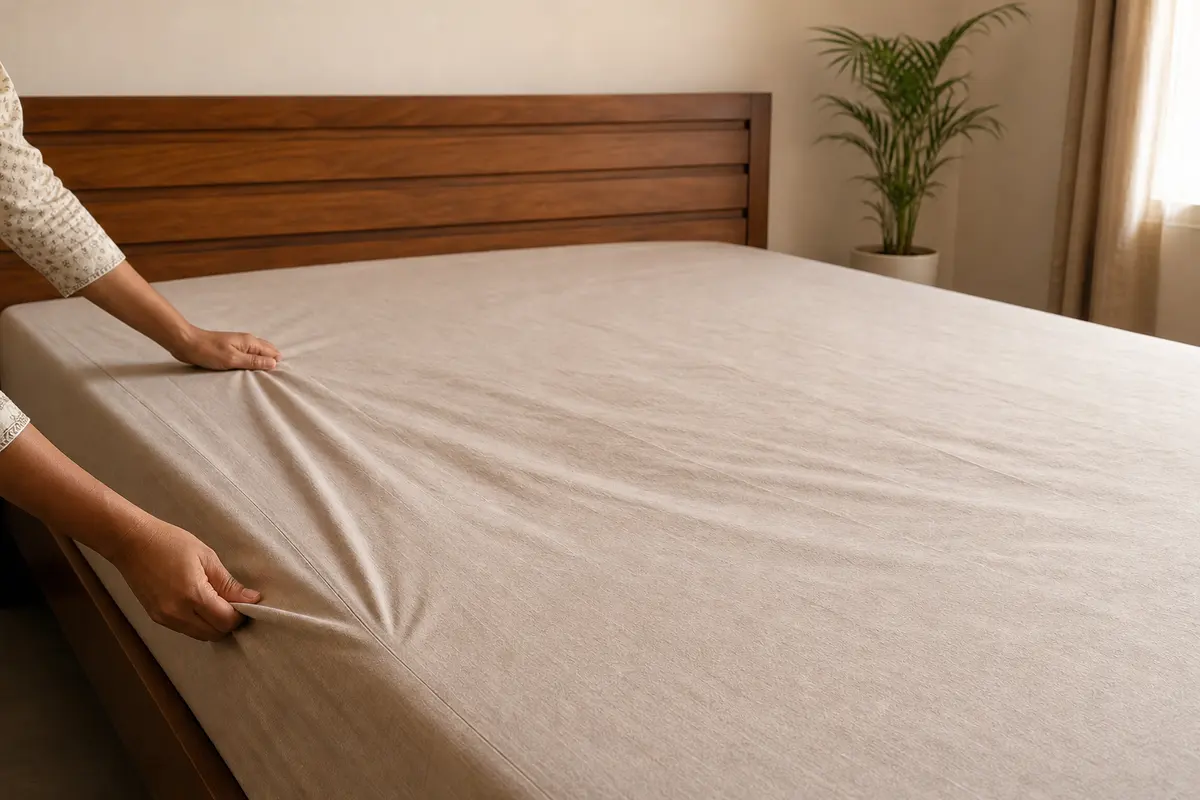
To keep a flat sheet in place, centre it first and then tuck the foot end before the sides. Most loose sheets are simply off-centre, with too little cloth on one side to hold.
Spread the sheet so that an equal amount hangs on the left and right. Lift the mattress at the foot and push the sheet well under. At each foot corner, pick up the hanging side about a foot from the corner and lay it on top of the mattress. Tuck in the part that is still hanging, then bring the lifted part down and tuck that too. This gives a flat, folded corner that grips.
Finish by tucking the sides from foot to head. On a storage bed or a bed with a raised frame, where fingers cannot reach under the mattress, push the cloth down the gap with a flat hand or a wooden ruler.
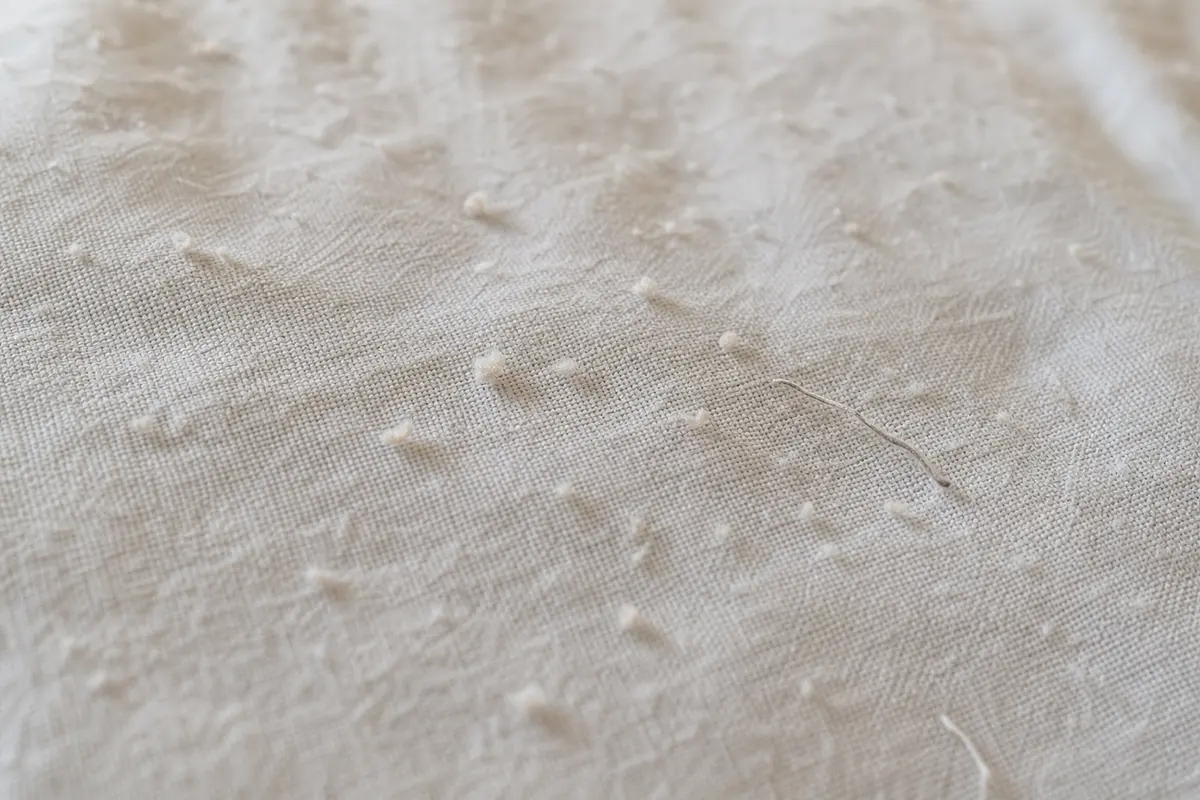
Why do sheets feel rough or form small balls after washing?
Sheets turn rough or form tiny balls, called pilling, when short or loose fibres work their way out of the yarn and tangle on the surface. Rubbing is what brings them out, both in the wash and under the body.
Pilling is seen more on fabrics made from short fibres and on some blends, where the stronger man-made fibre holds the little balls on the cloth and does not let them fall away. It usually shows first where feet and shoulders rub.
A stiff, harsh feel is often something else: detergent left in the cloth, or hard water. Using a little less detergent, an extra rinse and not overloading the machine often helps. Turning the sheet inside out and washing it away from towels and jeans cuts down rubbing. Some stiffness in a brand-new sheet is only the factory finish, and it goes after a wash or two.
How long do sheets last, and when should you replace them?
There is no fixed life for a sheet. It depends on the cloth, how often it is washed and how it is dried. A sheet used in rotation with two others is washed far less than one used every week, so it lasts longer.
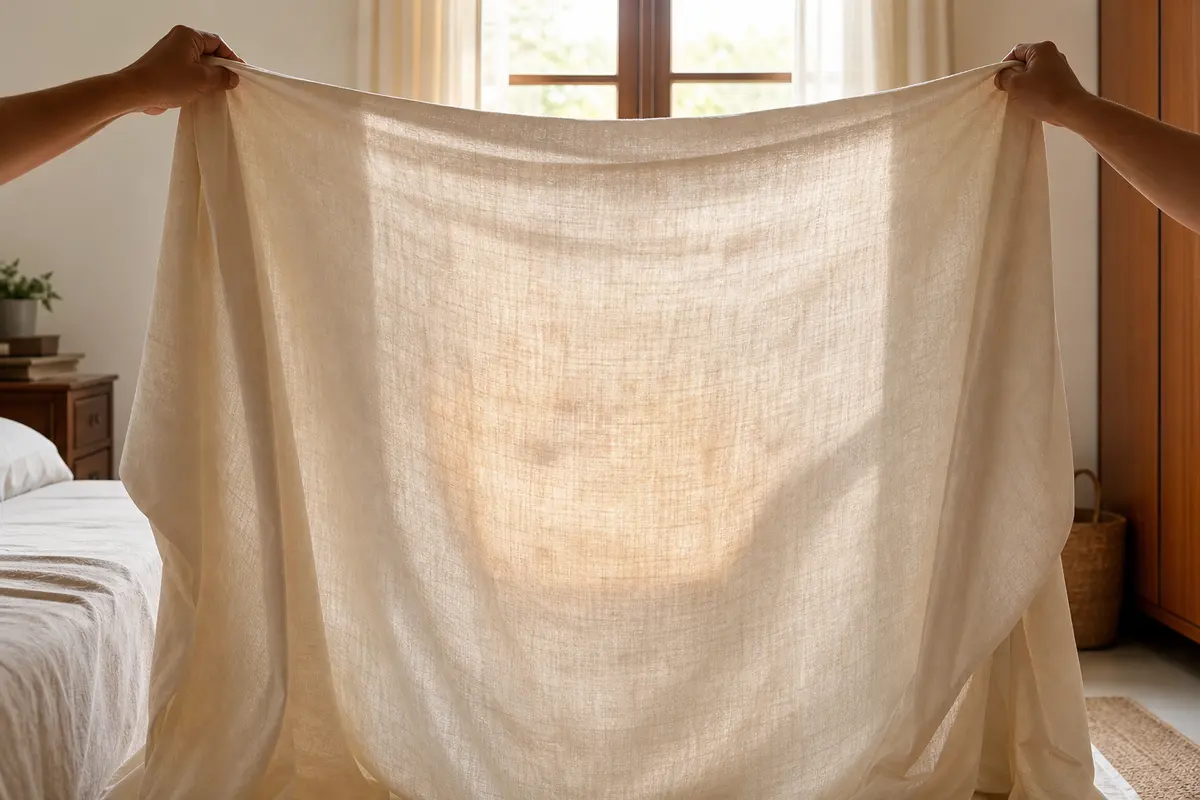
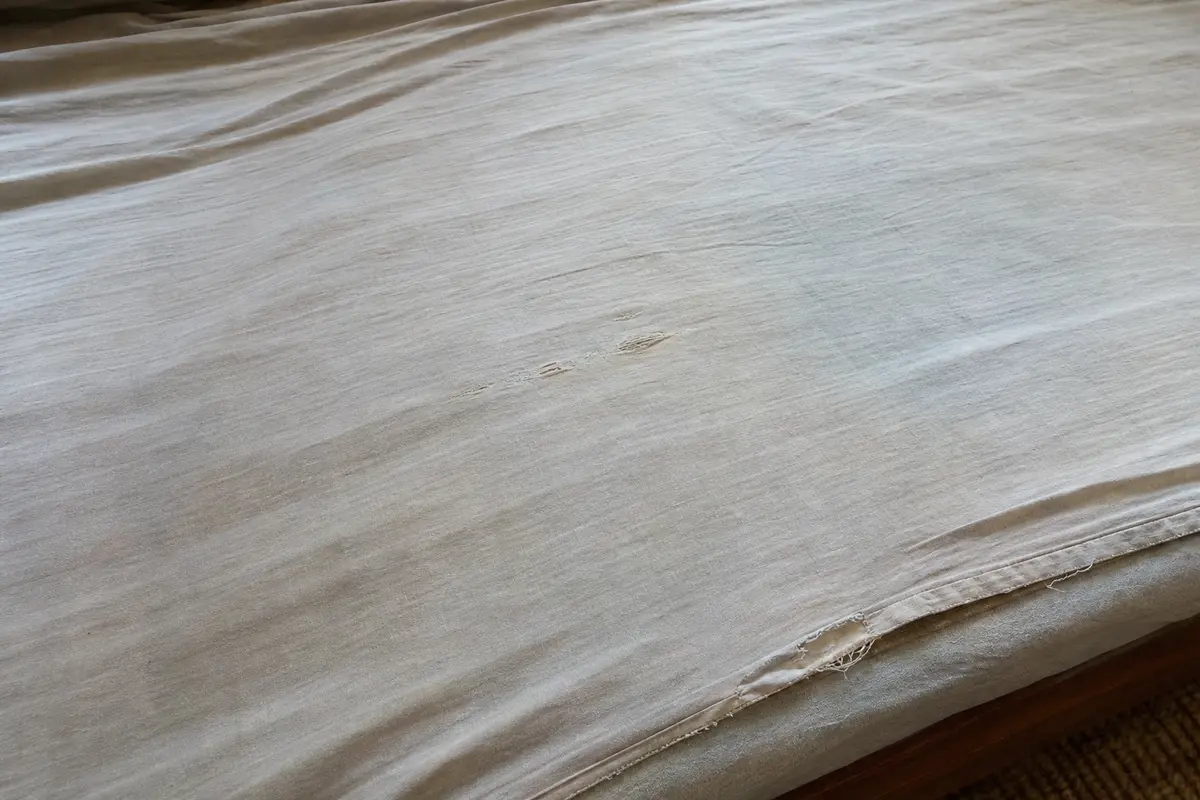
The sheet itself tells you when it is tired. Hold it up against a window. If the middle looks much thinner than the edges, or you can see light through a patch, the fabric is wearing out there. Other signs are small tears that grow after each wash, hems coming apart, and colour that has faded unevenly.
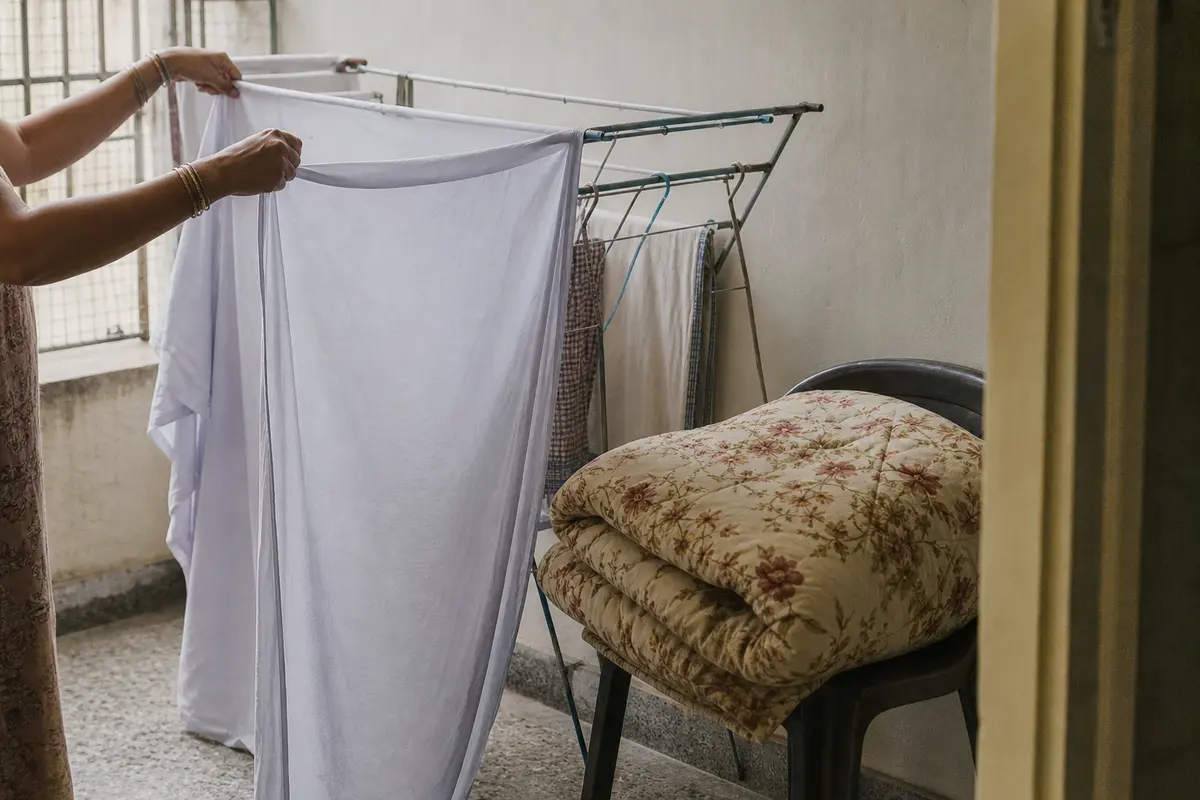
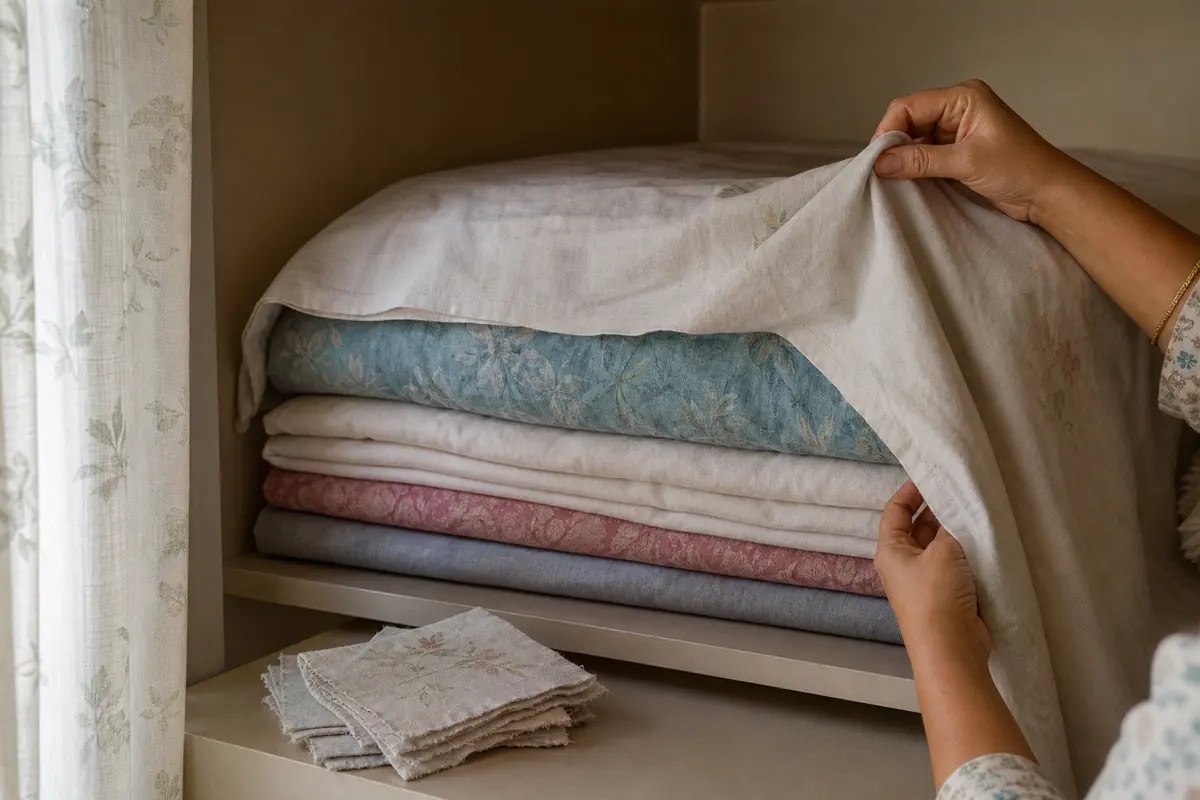
A worn sheet need not be thrown away at once. Many families move it to the guest bed, use it as a dust cover over stored bedding, or cut it into soft cleaning cloths. Strong sun and very hot water wear cotton faster, so gentle washing and shade drying add to its life.
Printed, dyed or woven: how patterns on sheets are made
Sheet designs are made in three main ways: printing colour on finished cloth, dyeing the whole cloth one colour, or weaving the pattern in with coloured yarn. Each looks and behaves a little differently.
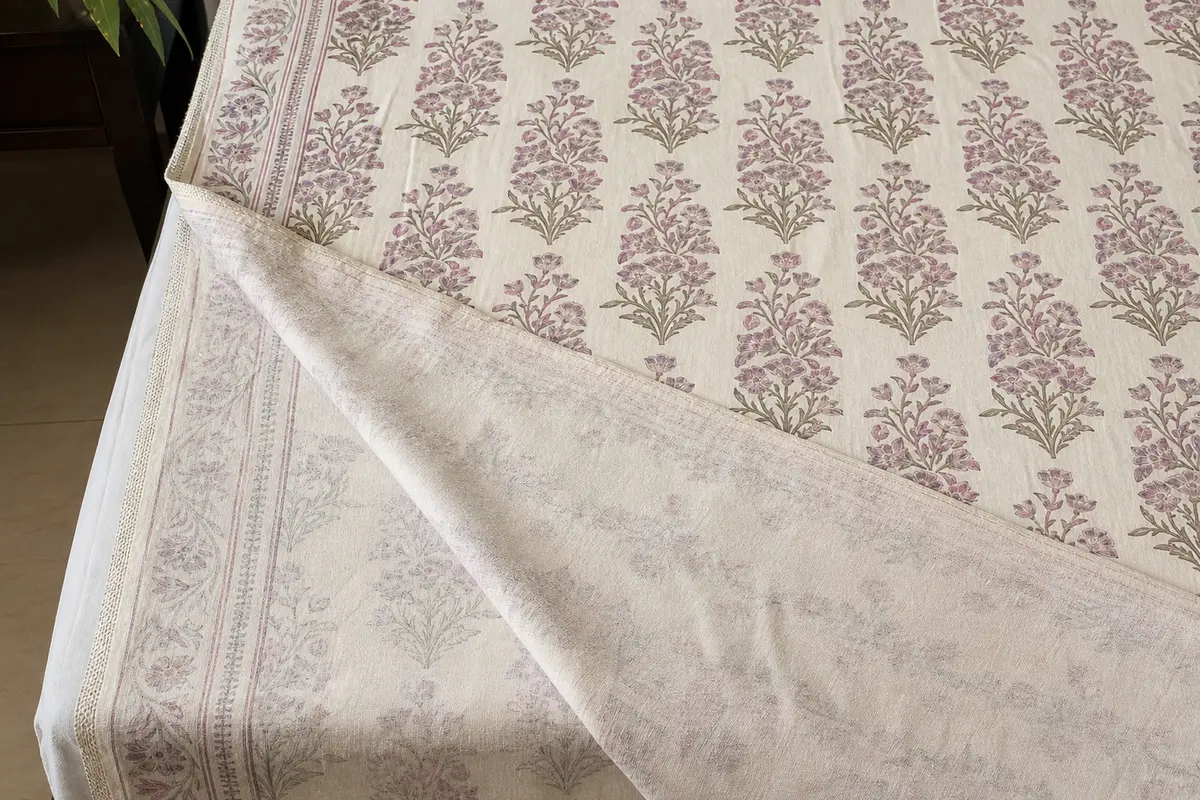
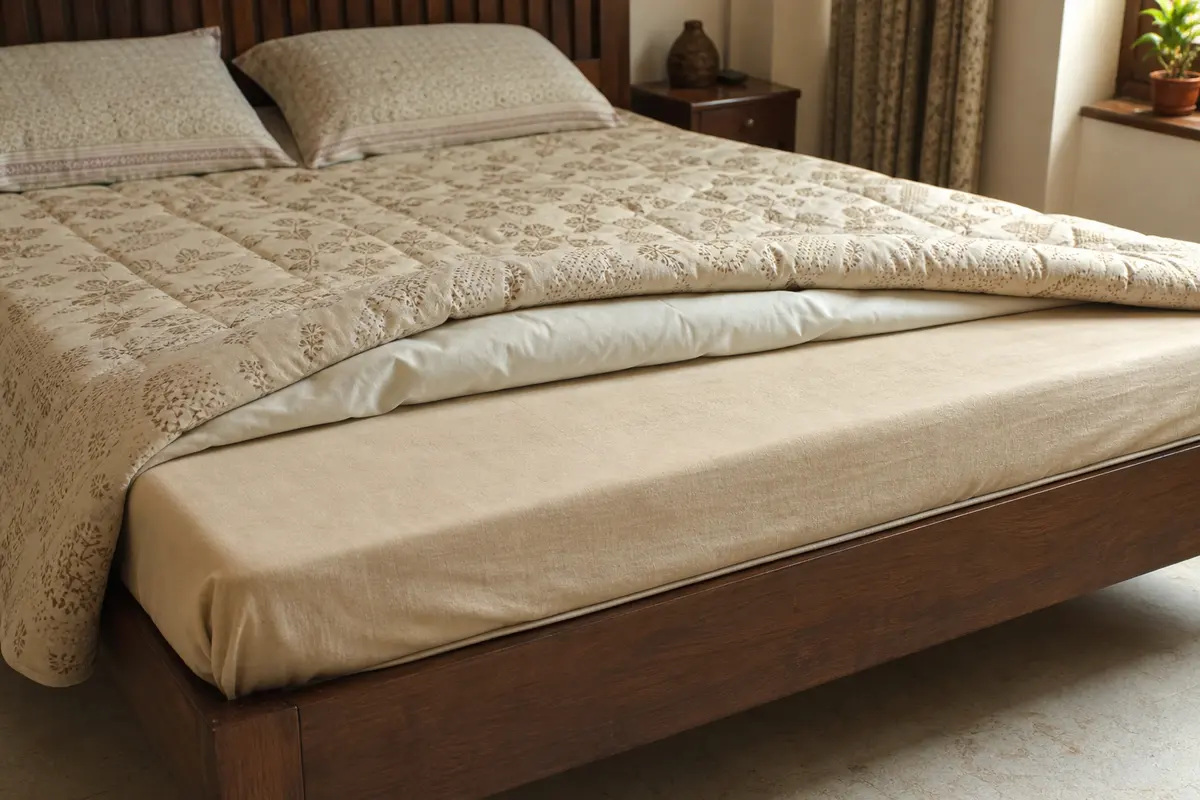
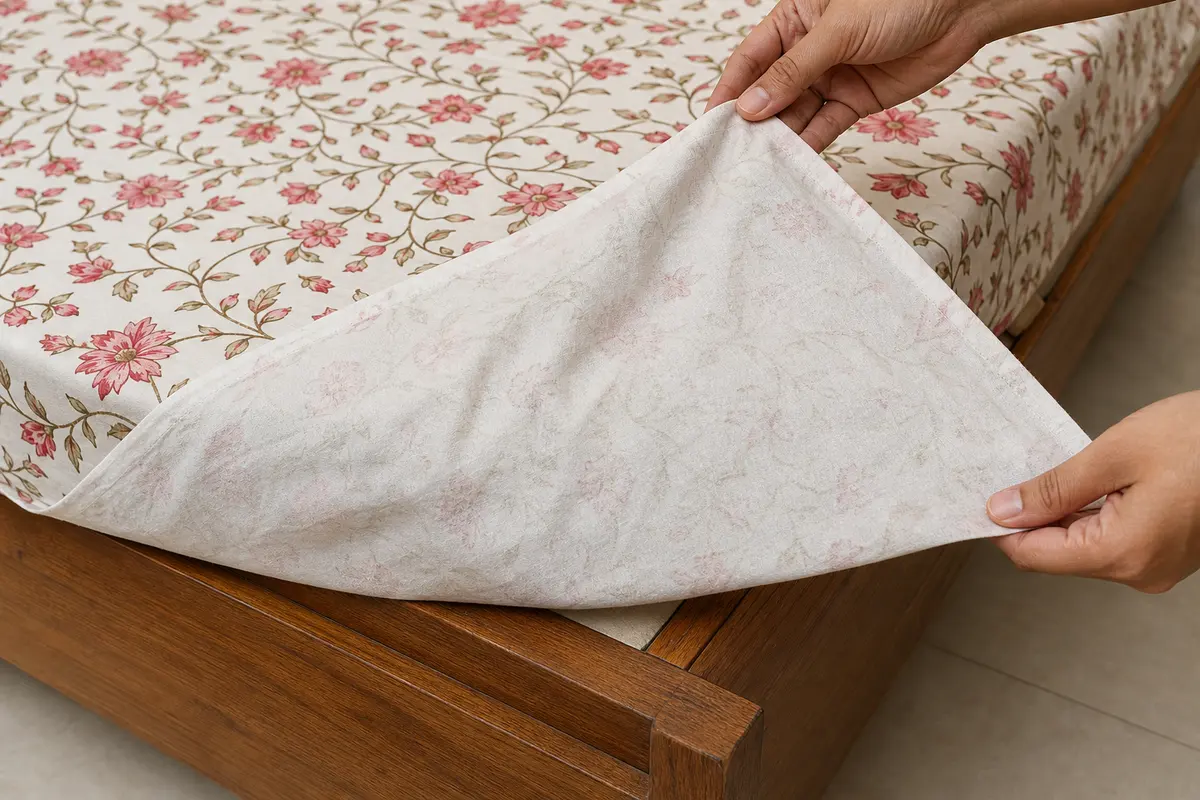
A printed sheet has the design on the face, and the back is paler. Most floral and motif sheets are made this way. A piece-dyed sheet is dipped as whole cloth, so it is one solid colour on both sides. A yarn-dyed sheet is woven from threads that were coloured beforehand. Stripes and checks made like this look the same on both sides.
You can check this at home by turning over a corner. If the back is nearly as bright as the front, the colour goes through the cloth. This does not make one kind better than another. It only tells you what to expect, for example that a printed sheet should always be laid face up.
The pictures in this article are illustrations made to explain each point. They are not photographs of Hayiga products.
04When should you use it?
What it is made of
Most bedsheets are cotton, a cotton blend or polyester (a man-made fibre). Cotton lets air pass through, which many people like in hot weather. The fabric is stated on each product.
Flat or fitted
A flat sheet is a simple rectangle and can suit more than one mattress size. A fitted sheet has elastic, stays in place better, but is made for one mattress size and height.
Sizes
Bedsheets are usually sold as single, double, queen and king. These names are not the same for every maker, so compare the measurements in the product details with your own mattress.
When to use it
On every bed, all year round. In summer many people sleep with only a bedsheet below and a light cover or nothing on top. In winter the same sheet goes under a warmer cover.
What it does
It protects the mattress from sweat, dust and stains. A sheet is much easier to wash than a mattress, so changing it regularly keeps the whole bed fresh.
Care
Wash new sheets once before use. Wash dark and light colours separately at first, use a mild detergent, and dry away from harsh sun to slow down fading. Follow the care label.
05Before you buy
✓Your mattress length, width and height, compared with the sheet's measurements in the product details
✓Whether the sheet is flat or fitted
✓The fabric stated on the product, such as cotton or a blend
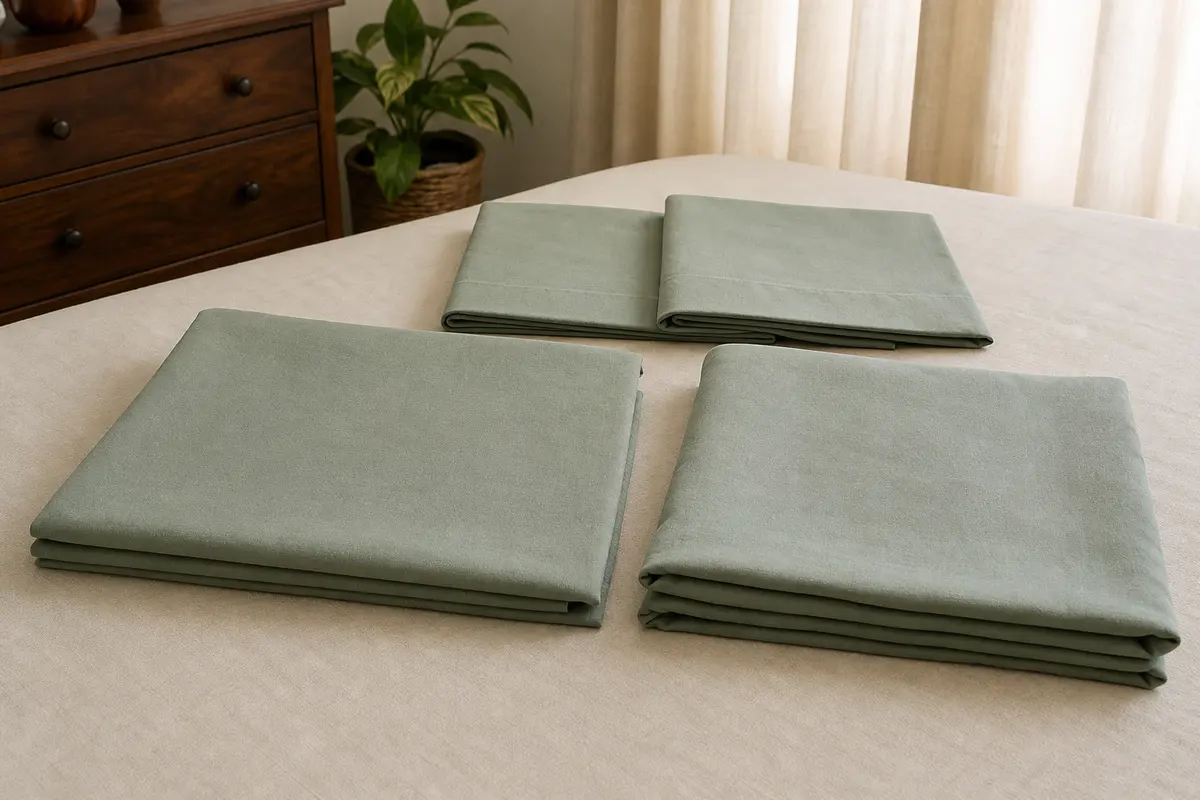
✓Whether pillow covers are included, and how many
✓The size of the pillow covers against your pillows
✓The care instructions, especially for the first wash and for dark colours
✓Whether the colour and print suit a room that is used every day
Common questions
What is a bedsheet used for?+−
A bedsheet is used to cover the mattress so that you sleep on a clean, smooth layer of fabric instead of on the mattress itself. It takes up sweat and dust and is easy to remove and wash. It also gives the bed its look, because the sheet is the largest piece of fabric you see on a made bed.
What is the difference between a flat bedsheet and a normal bedsheet?+−
In India they are usually the same thing. A flat bedsheet is a plain rectangle of fabric with stitched edges and no elastic. You spread it over the mattress and tuck the extra fabric under the sides. When a shop simply says bedsheet, it most often means a flat sheet. A sheet with elastic is called a fitted bedsheet.
How many bedsheets should I own?+−
A common rule of thumb is two or three bedsheets for each bed: one on the bed, one in the wash and one spare. In the monsoon, washing takes longer to dry, so an extra sheet can be useful. Homes with small children or frequent guests may want one or two more.
Do bedsheets come with pillow covers?+−
Often, but not always. Many double, queen and king bedsheets are sold with two matching pillow covers, and single bedsheets often come with one. This is not a fixed rule. Check the product's details to see exactly which pieces are included and what size they are.
How often should a bedsheet be washed?+−
Many households wash bedsheets about once a week. In hot and humid weather, when people sweat more, some prefer to change them more often. There is no single correct answer. It depends on the season, how many people use the bed and your own comfort.
Which fabric is good for bedsheets in Indian summers?+−
Many people choose cotton for summer because it lets air pass through and soaks up sweat. Lighter, thinner weaves usually feel cooler than heavy ones. Comfort still depends on the weave, the room and the person. Read the fabric stated in the product details and do not go by the name alone.
What size bedsheet do I need for my bed?+−
Measure your mattress: length, width and height. A flat bedsheet should be larger than the top of the mattress on all sides so that there is enough fabric to tuck in. Size names such as double, queen and king differ between makers, so compare the measurements and do not rely only on the name.
Is a bedsheet the same as a bed cover?+−
No. A bedsheet lies directly on the mattress and is what you sleep on. A bed cover, also called a bedspread, is spread over the made bed during the day to keep off dust and to make the bed look neat. It is usually thicker and larger than a bedsheet and is removed or folded back at night.