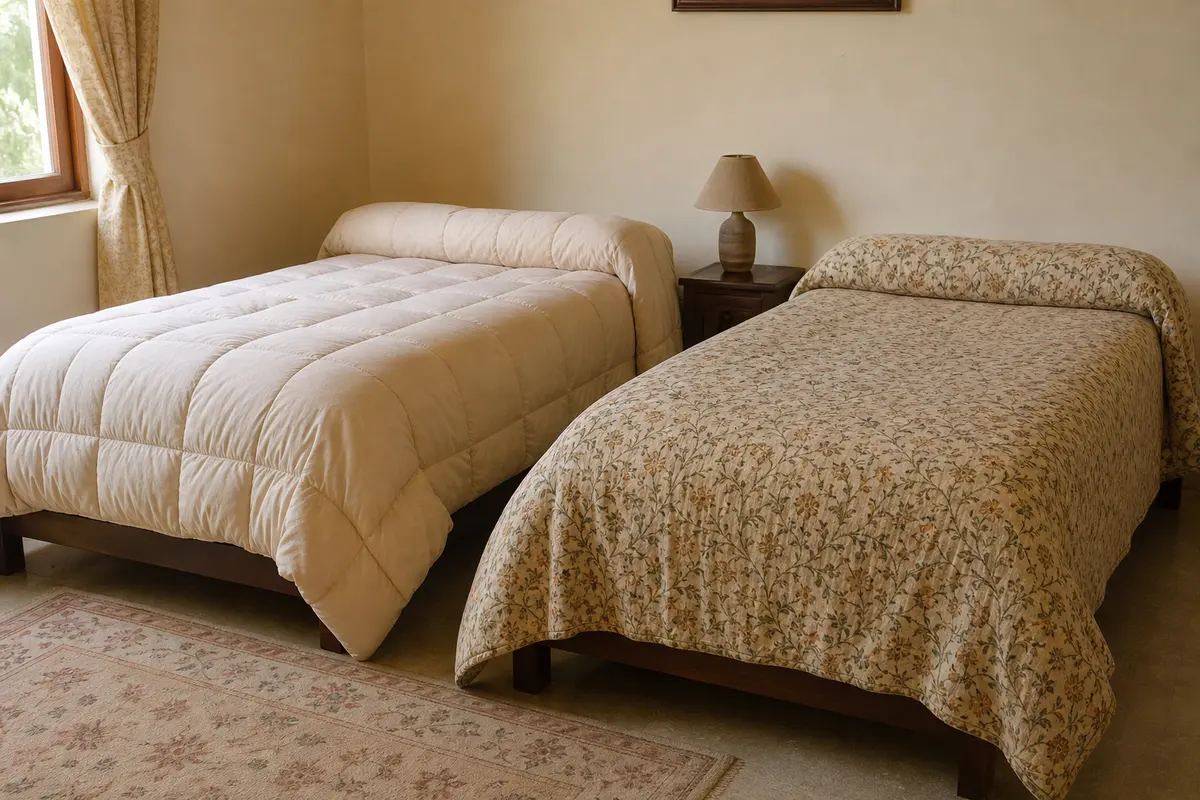
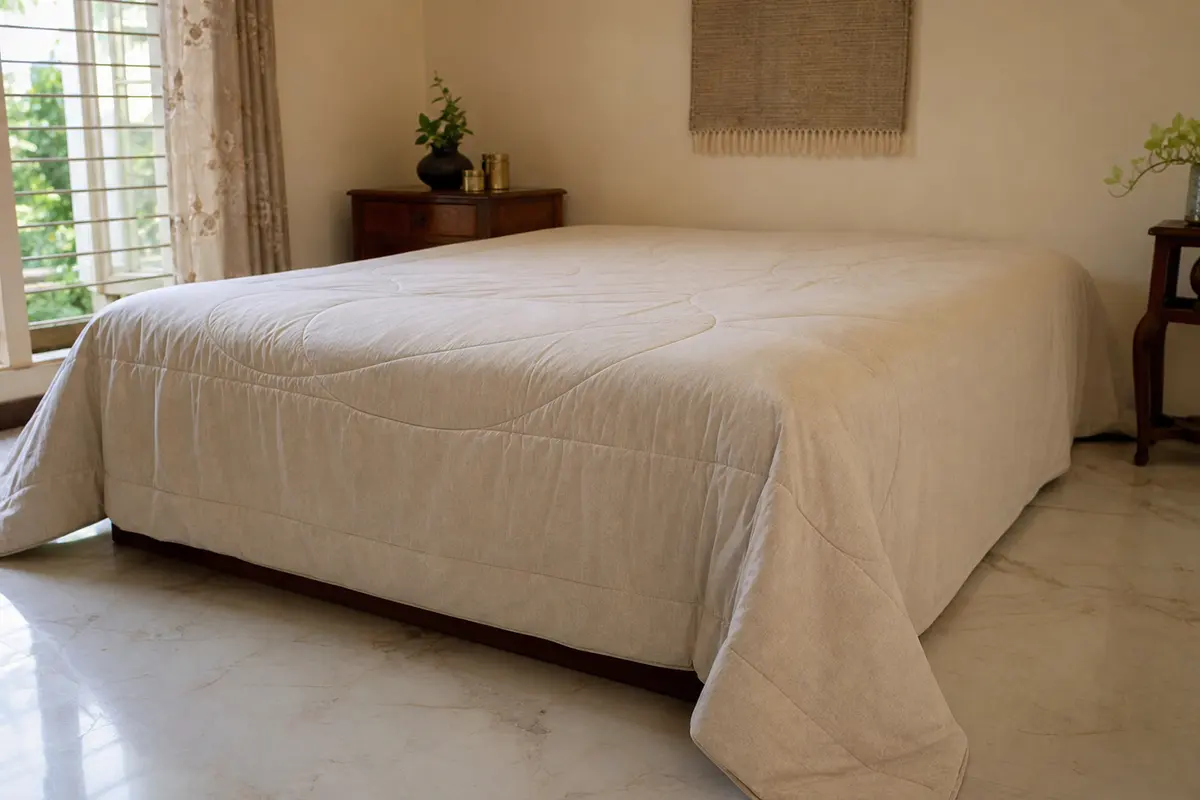
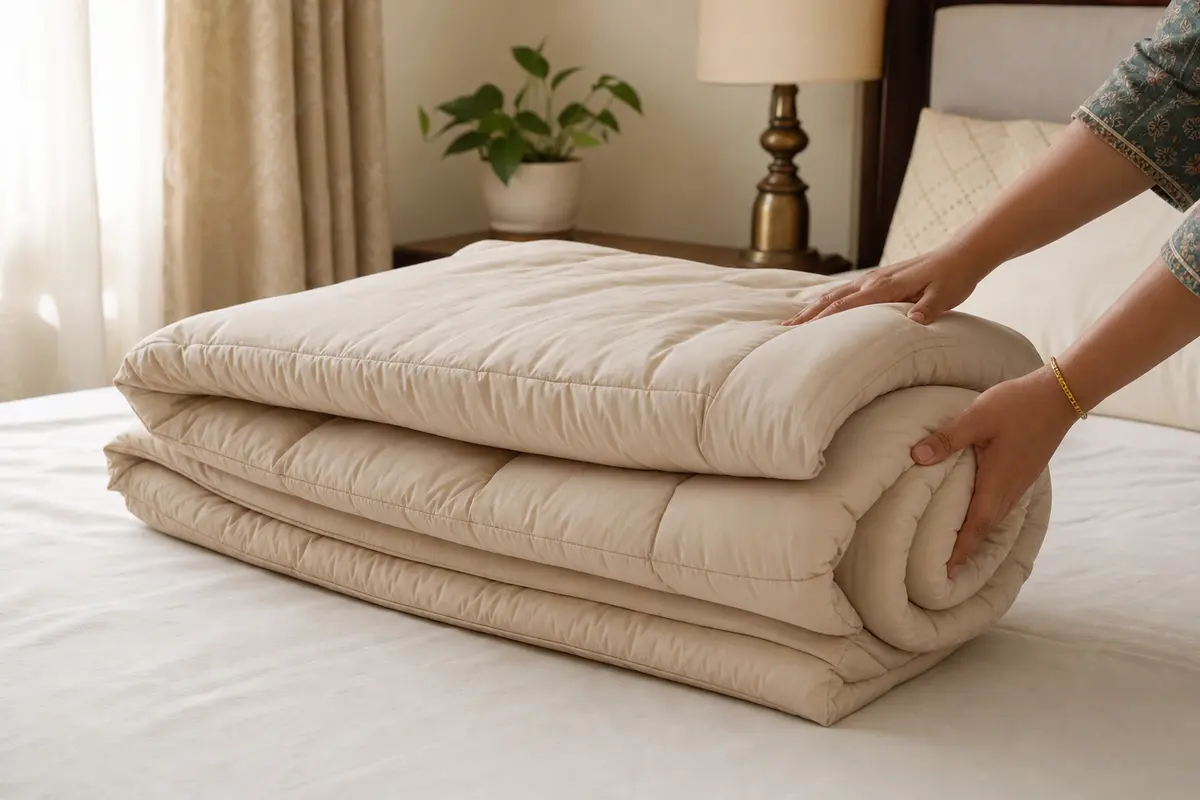
A padded cover with filling inside, for more warmth.
01The short answer
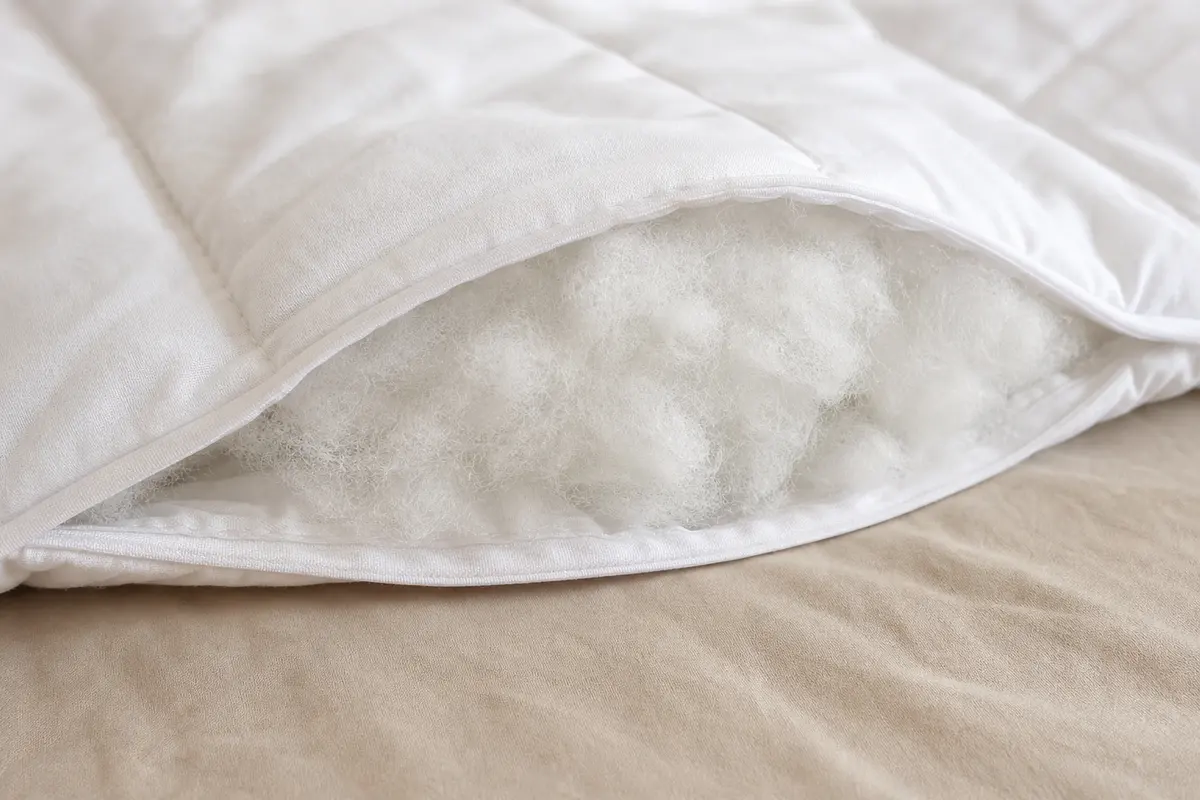
A comforter is a thick, soft bed cover with fluffy filling stitched between two layers of fabric. The filling holds air, and this trapped air is what keeps you warm. A comforter is a finished piece. You use it as it is, with no separate cover needed. In India it is mostly used in winter and in bedrooms where the AC is kept quite cool. Comforters come in lighter and heavier kinds, so one that suits an AC room in May may not be enough for a cold January night in the north.
At a glance
Warmth
LightWarm
Thickness
ThinThick
Ease of washing
Needs careEasy
02How is it different?
How it differs from a duvet
Comforter
Duvet
Cover
Finished; used as it is
A plain insert used inside a duvet cover
Washing
The whole piece is washed
Usually only the cover is washed
03Comforter: all you need to know
What is a comforter filled with?
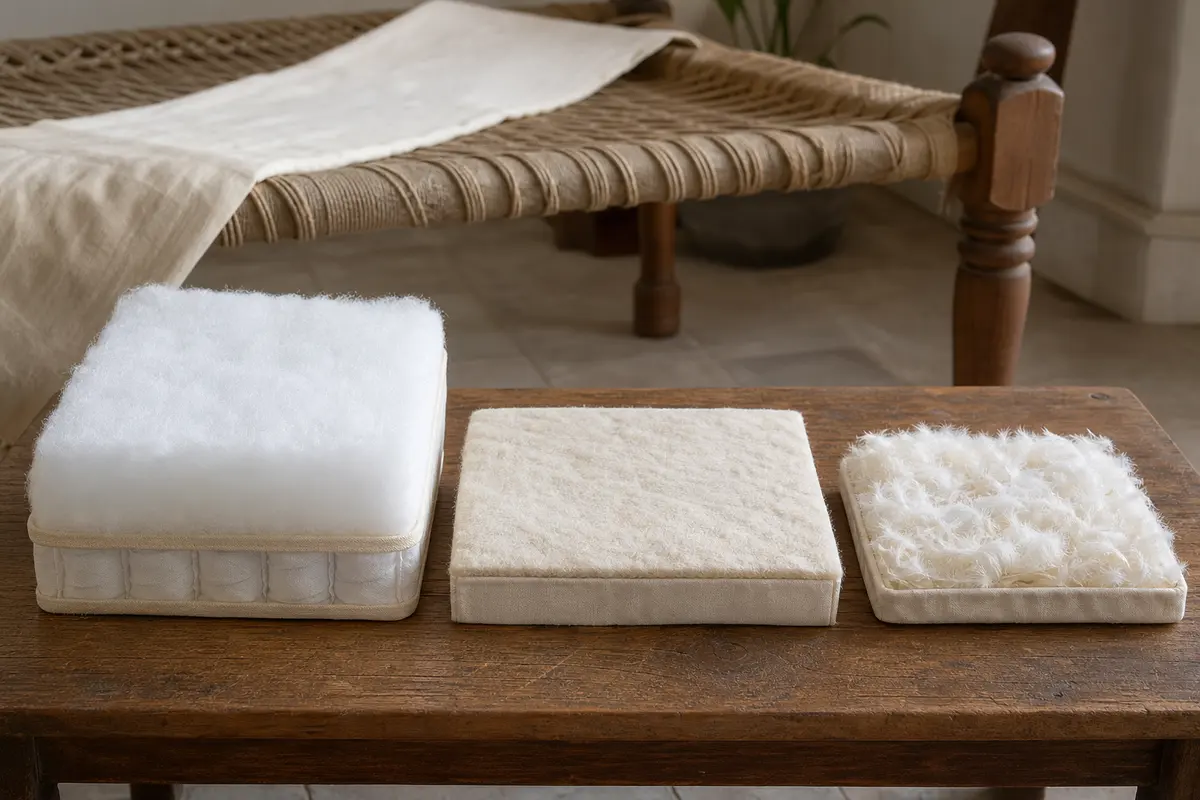
Most comforters sold in India are filled with polyester fibre, a light man-made fibre that is fluffed up so it holds air. Some are filled with cotton, and a few with down, the soft under-feathers of ducks or geese.
Polyester filling goes by several names on labels: fibrefill, hollow fibre, siliconised fibre or microfibre. Hollow fibre has a tiny air channel inside each strand. Siliconised means the strands are coated so that they slip past each other and stay springy. All of these are light for their bulk and dry faster than cotton.
Cotton filling feels heavier and flatter, and takes long to dry. Down is very light and warm but needs careful cleaning and is less common here. The outer cloth, called the shell, matters as well, since that is what touches you. The label should name both shell and filling. If only one is given, check the product's details before deciding.
Comforter vs razai: what is the difference?
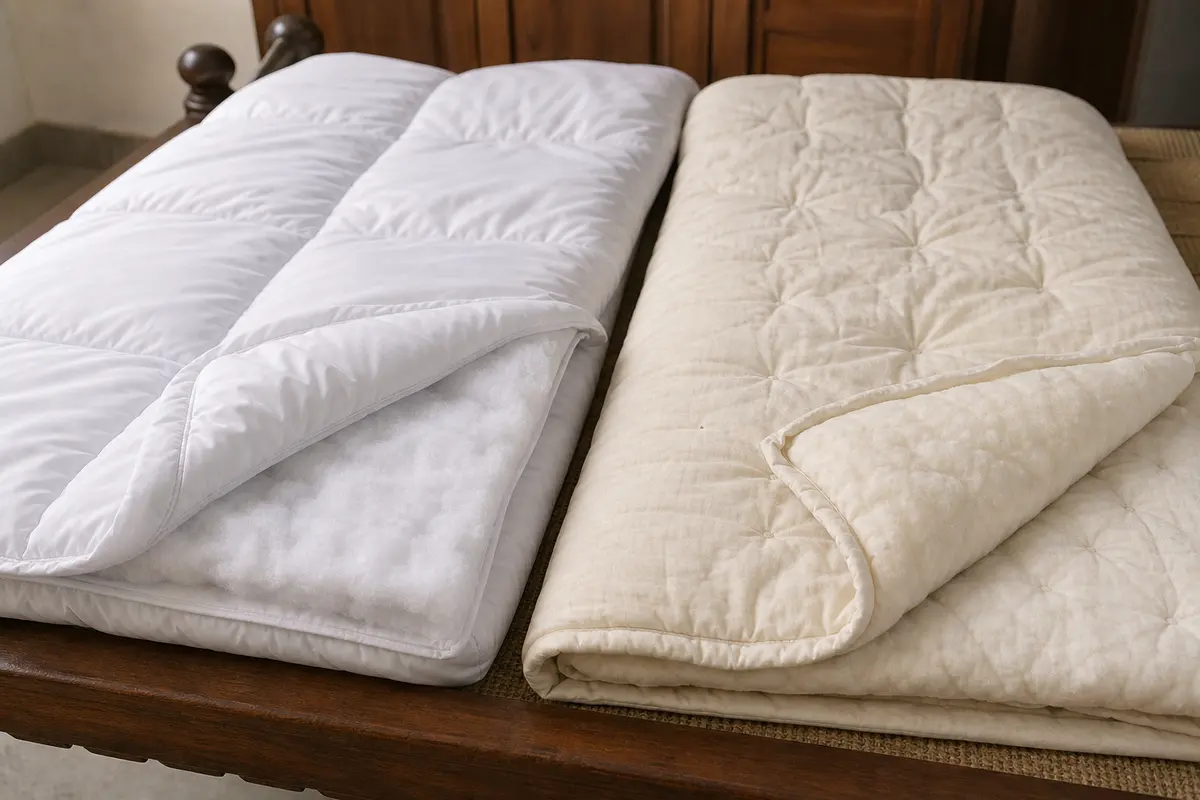
A comforter is usually a machine-made cover with springy polyester filling, while a razai is the traditional Indian quilt, most often filled with cotton. Both are slept under for warmth, but they feel different on the body.
A comforter is puffy and light for its thickness. It sits on top of you like a cushion of air. A cotton razai is denser. It lies closer and drapes around the body, and many people like that settled weight on a cold night.
Care is the other difference. Many comforters can go into a large home washing machine if the label allows. A thick cotton razai is generally sunned and aired, and its cotton may be fluffed up again by a carder after some years. In everyday shopping the two names are often mixed up, so look at the filling stated on the product to know which kind you are really getting.
What size comforter fits a single, double or king bed?
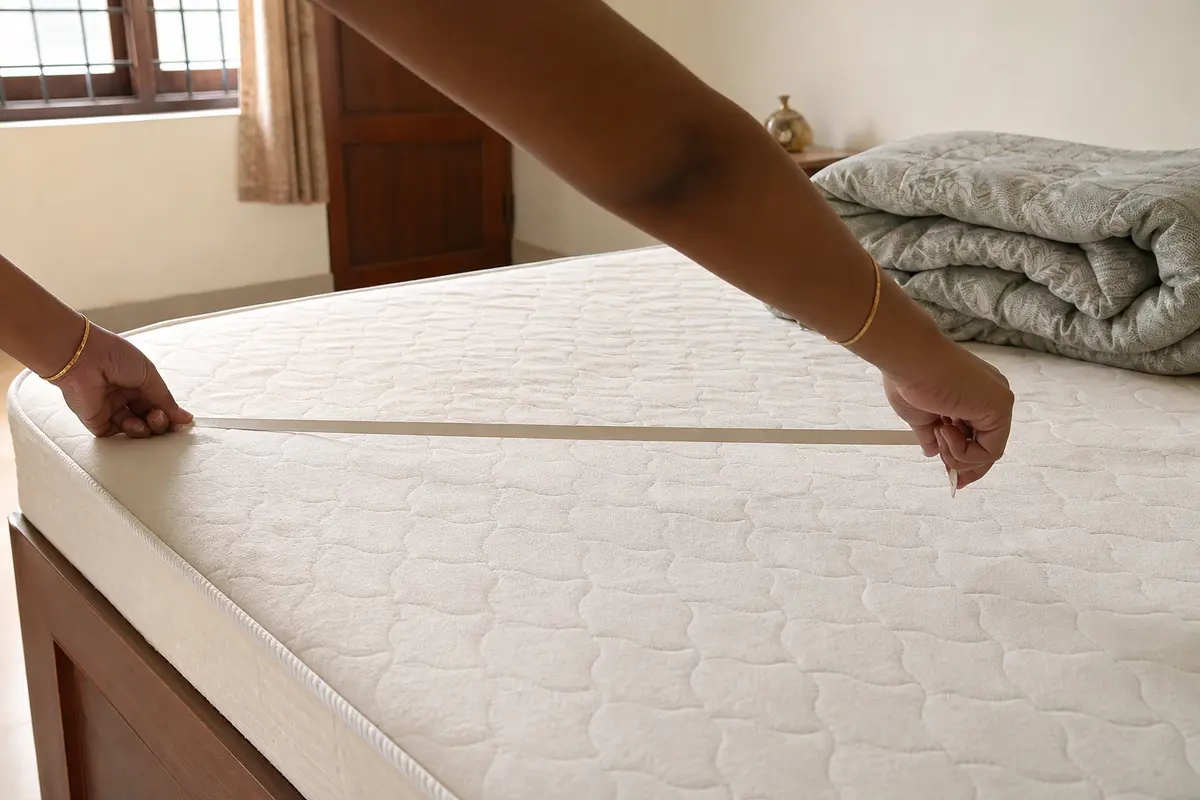
A comforter should be at least 16 to 20 inches wider than the mattress, so that it hangs 8 to 10 inches on each side. With less than that, it lifts off whenever one sleeper turns.
Work from your mattress width. A single is about 36 inches, a double 48, a queen 60 and a king 72. Many single comforters are around 60 by 90 inches and many doubles around 90 by 100 inches, though this varies by maker. A 90 inch wide piece covers a queen bed well. On a 72 inch king it leaves about 9 inches a side, which is just enough for two calm sleepers.
Remember that a thick comforter loses some width as it bends over two bodies. Couples who tug the cover at night often do better with a larger size or with two single comforters. Compare the measurements in the product's details with your bed before choosing.
How to use a comforter on the bed, with or without a top sheet
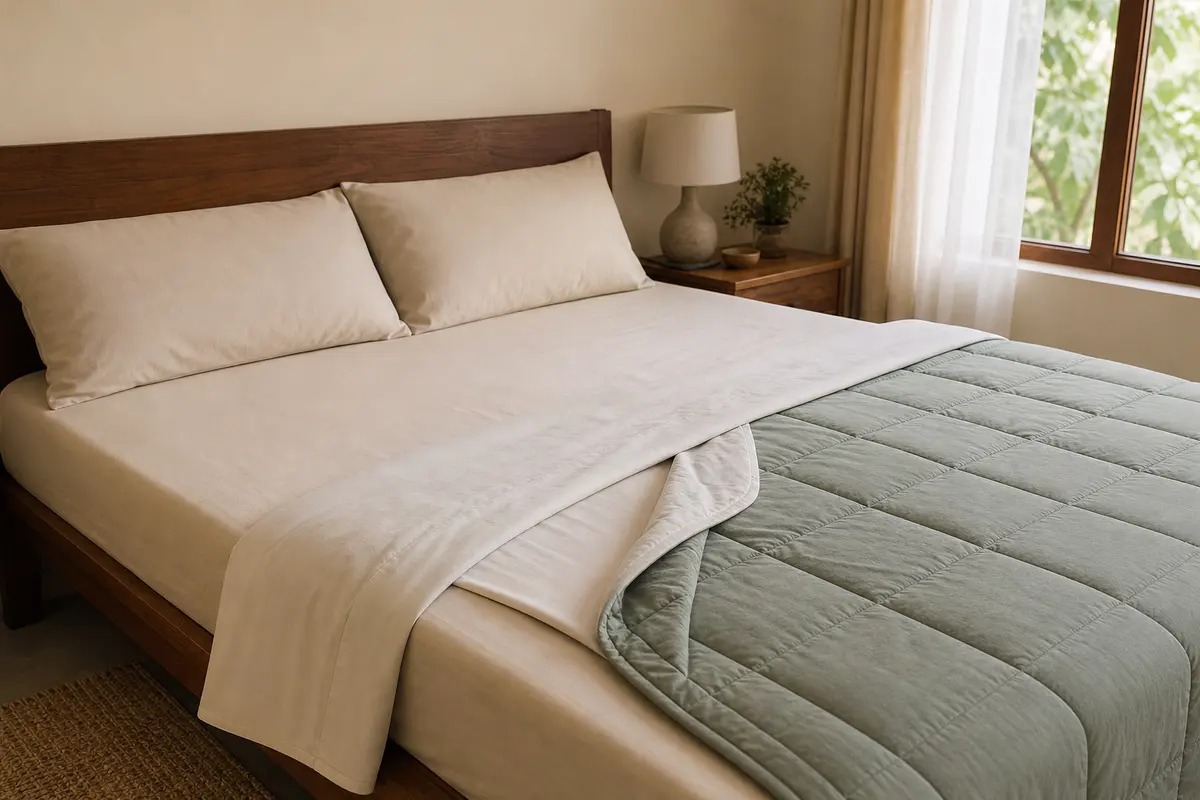
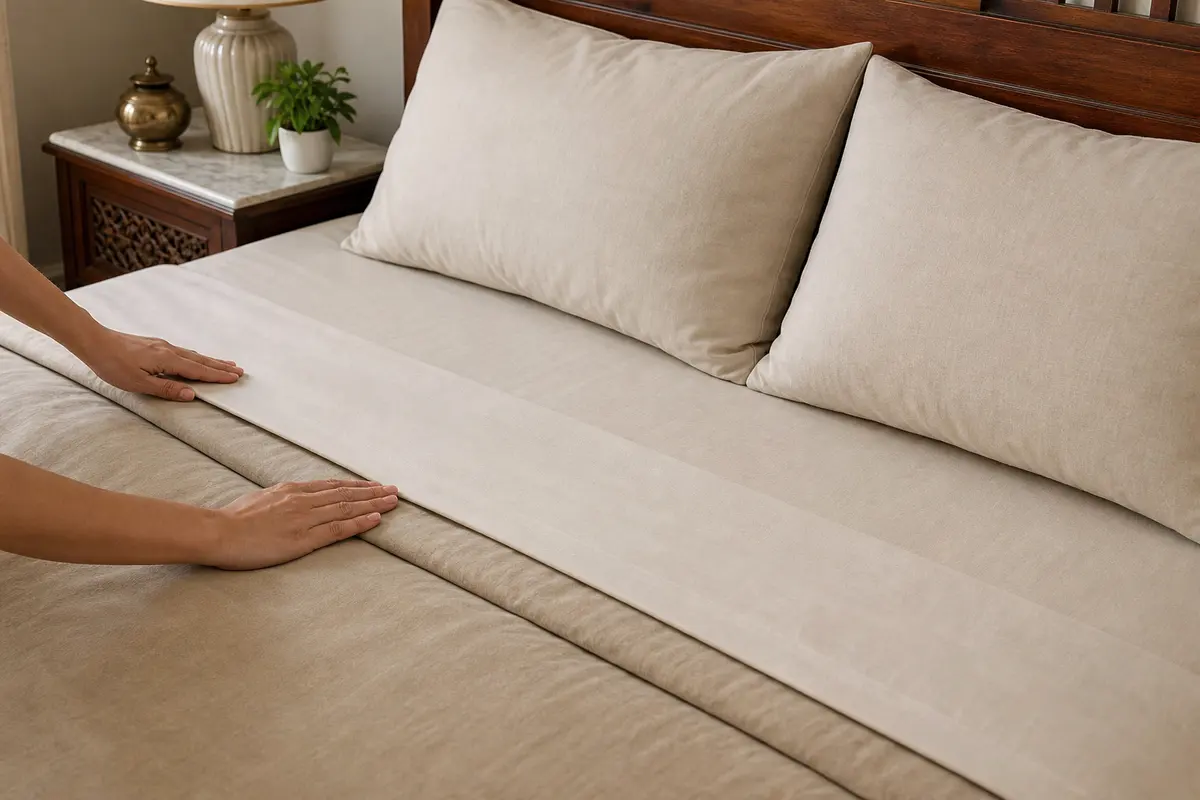
A comforter goes on top of everything else: bedsheet first, then a top sheet if you use one, then the comforter. You sleep under it, with the top sheet between your body and the comforter.
The top sheet is optional, but it keeps sweat and oil off a piece that is slow to wash. Spread it with its head end a few inches above where the comforter will sit. Lay the comforter over it, then fold the edge of the sheet back over the top edge of the comforter. This gives a clean cloth band near your face.
In the morning, hold two corners and give the comforter a good shake so the filling lifts, then spread it flat or fold it in three at the foot of the bed. Try not to sit on it folded for hours, as this presses the filling down. In an AC room, pull it only up to the waist at first, since a cooled room feels colder towards morning.
How to make a flat comforter fluffy again
A comforter that has gone flat can usually be revived by airing it in mild sun and then shaking and patting it well. The filling is pressed down, not gone, and air is what lifts it.
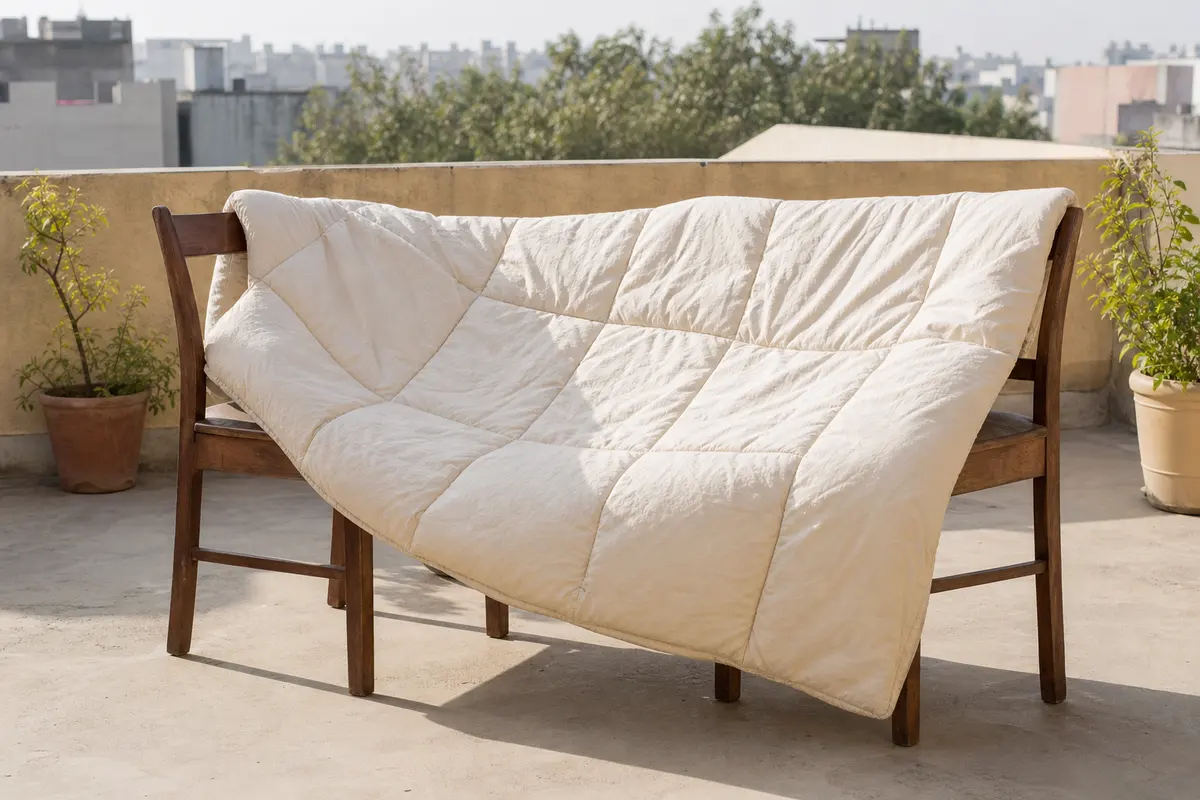
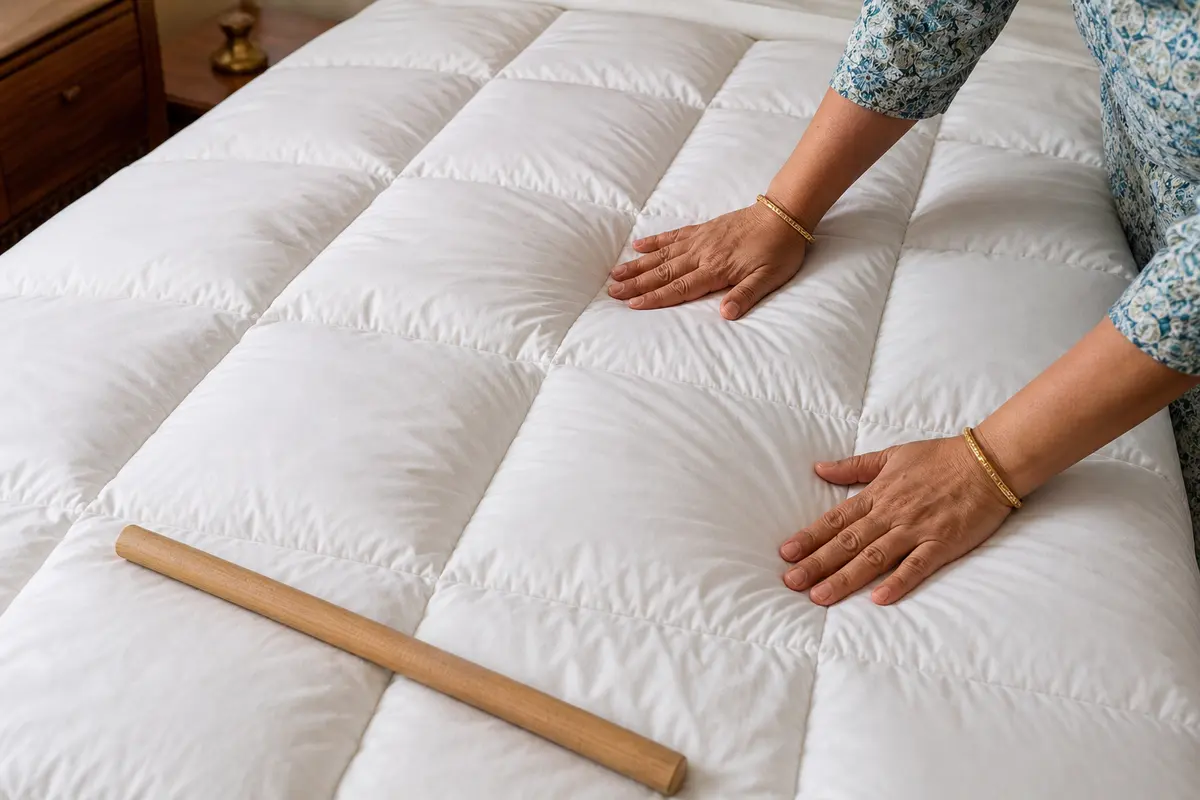
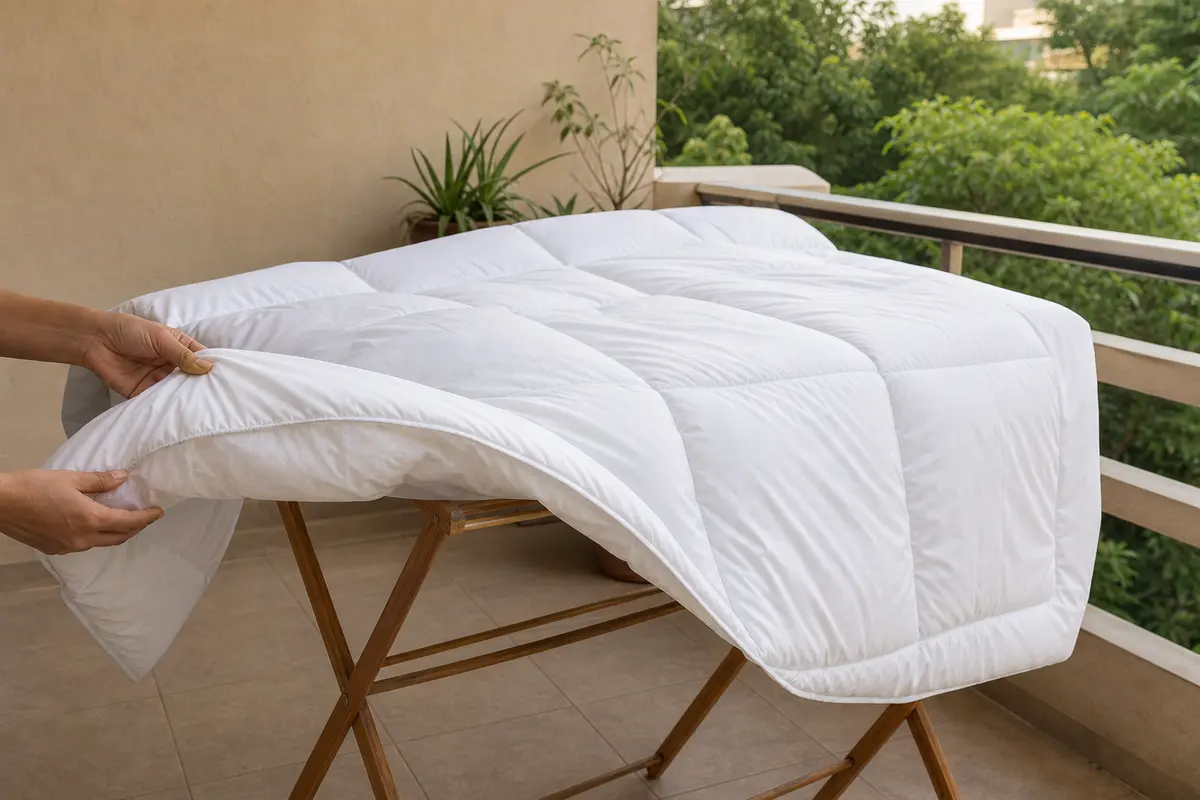
Spread it on a clean terrace line or over two chairs on a dry, bright morning for a couple of hours, turning it once. Then hold it by one edge and shake it firmly. Pat it all over with open palms, or beat it lightly with a clean stick, the way razais are beaten. Work on each stitched box so the fibre loosens inside it.
If the care label allows machine drying, a short, low-heat tumble also brings back loft, which is the bedding word for puffiness. High heat can damage polyester fibre, so stay with the label. If one box is empty while the next is packed, the inner stitching has given way, and shaking will not correct that.
How to store a comforter in summer
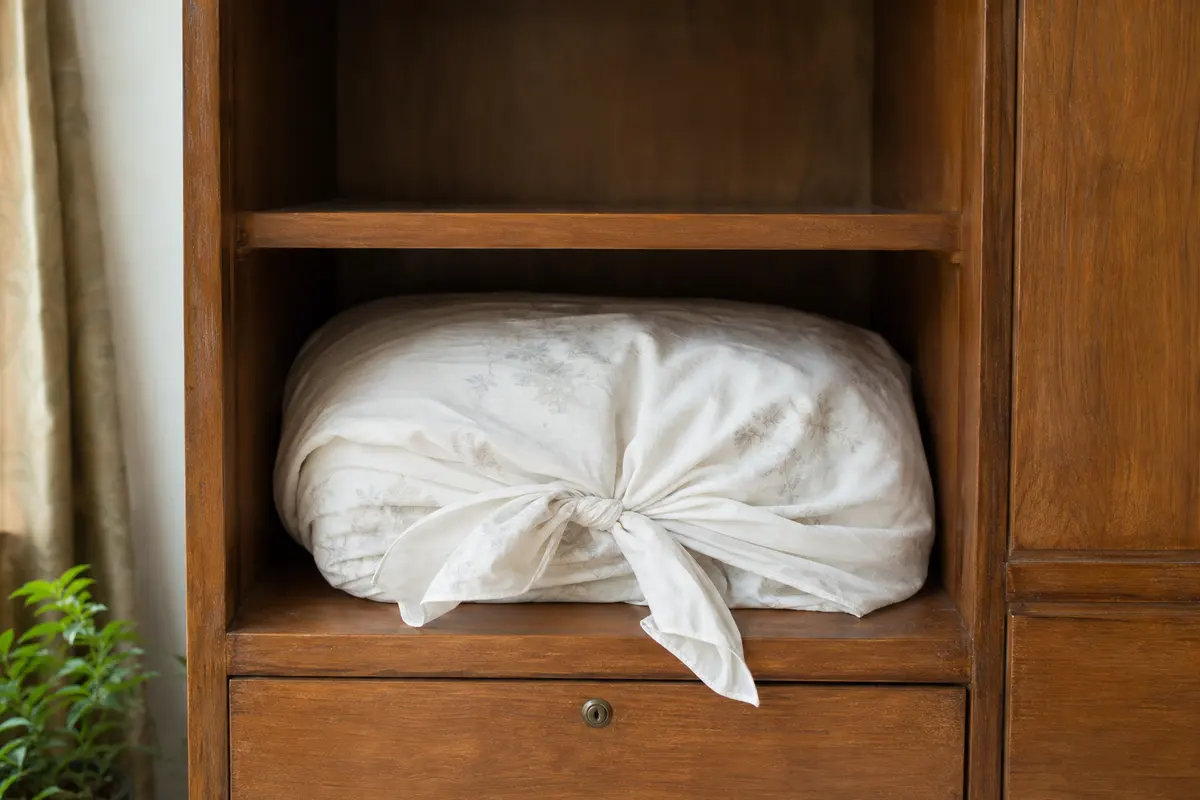
Store a comforter clean, completely dry and loosely folded, in a cloth bag on a dry shelf. Putting it away slightly damp or unwashed is what causes smell and marks by next winter.
Wash or air it first, as the care label directs. Then give it one full day to dry even if it feels dry already, because filling holds moisture deep inside. Fold it in thirds and roll it loosely. Do not keep heavy things on top of it for months, since long squeezing flattens the filling.
A cotton bag or an old bedsheet tied around it lets air pass. The zip bag it came in is fine if it has a cloth or mesh panel. Vacuum bags save space, but long, hard pressing can leave the filling flat, so check what the maker advises. In coastal or very humid cities, take it out once during the monsoon and air it.
The pictures in this article are illustrations made to explain each point. They are not photographs of Hayiga products.
04When should you use it?
How it is made
Two layers of fabric with filling in between, stitched through in boxes or lines so the filling does not shift. The filling is often polyester fibre; some use cotton or down.
When to use it
Cooler months and air-conditioned bedrooms. Lighter comforters suit AC rooms and mild winters. Heavier ones are meant for properly cold nights.
Understanding GSM
GSM (grams per square metre) tells you how heavy the filling is. A higher GSM generally means a thicker, warmer comforter. Check the product's details for this figure.
Sizes
Usually sold as single and double, and sometimes queen or king. A comforter should be bigger than the mattress top so that it hangs over the sides and covers you fully.
How it differs
It is thicker and warmer than a dohar or a quilt. Unlike a duvet, it does not go inside a cover. It is used directly, often with a bedsheet or top sheet under it.
Care
Check that it fits loosely in your washing machine. Wash gently, dry fully in open air and shake it to spread the filling. Large or heavy pieces may need a laundry.
05Before you buy
✓The measurements, so that it covers the mattress top and hangs over the sides
✓How light or heavy it is described as being, or its GSM if this is stated
✓Whether you need it for an AC room, a mild winter or a cold winter
✓The outer fabric and the filling stated on the product
✓Whether it is stitched through in boxes or lines to hold the filling in place
✓Whether it will fit loosely in your washing machine
✓The care instructions
✓Whether you have dry storage space for it in the months it is not used
Common questions
What is a comforter used for?+−
A comforter is used as a warm top cover while sleeping. Its filling traps air and holds body heat, so it is chosen for winter nights and for rooms where the air conditioner is kept cool. Many people also spread it over the bed in the day because its soft, puffy look makes the bed appear neat and full.
Does a comforter need a cover?+−
No. A comforter is finished and used as it is. A duvet is the kind that goes inside a cover. Some people still use a top sheet between themselves and the comforter, or put a cover on it, so that the comforter itself needs washing less often. This is a matter of choice.
What is the difference between a comforter and a blanket?+−
A comforter has filling stitched between two fabrics, which makes it thick and puffy. A blanket is usually a single layer of fabric, such as wool, fleece or cotton, with no filling. Warmth depends on the material and thickness of each. Both are used as top covers in cool weather.
Can a comforter be used in summer?+−
A light comforter can be used in summer in an air-conditioned room, especially if the room is kept quite cool. Without cooling, most comforters will feel too warm in Indian summer heat. For a lighter layer, many people use a dohar or an AC blanket. It depends on the comforter's thickness and the room temperature.
What does GSM mean in a comforter?+−
GSM stands for grams per square metre. In a comforter it usually describes the weight of the filling. A lower GSM means a lighter, thinner comforter that suits AC rooms and mild weather. A higher GSM means a thicker, warmer one for cold nights. Makers measure this differently, so use it as a guide and read the product's details.
Can I wash a comforter in a washing machine?+−
Often yes, if the care label allows it and the comforter fits loosely in the drum. If it has to be forced in, it will not wash or rinse well. Use a gentle cycle and mild detergent, and dry it completely, because damp filling can smell. Very large or heavy comforters are easier to clean at a laundry.
How do I choose the right size of comforter?+−
Choose a comforter that is wider and longer than the top of your mattress, so it hangs over the sides and does not leave anyone uncovered. A single suits one person. Two people sharing usually need a double or larger. Size names vary, so compare the measurements in the product details with your bed.
Why does the filling in a comforter become lumpy?+−
Filling can bunch up if the comforter is washed roughly, dried while folded, or stored tightly packed for a long time. Stitching in boxes or lines helps keep filling in place. Shaking the comforter well after washing and drying it spread out flat can help the filling settle evenly again.