A natural plant fibre; its feel depends on yarn and weave.
01The short answer
Cotton is a natural fibre that grows around the seeds of the cotton plant, and cotton fabric is made by spinning that fibre into yarn and weaving it into cloth. It is a very common bedding fabric in Indian homes because it lets air pass and soaks up sweat. But the word cotton alone does not tell you how a sheet will feel. That depends on how long the fibres are, how fine the yarn is, and how the cloth is woven and finished. This guide explains how cotton behaves in heat and humidity, how it creases and how to care for it.
02How is it different?
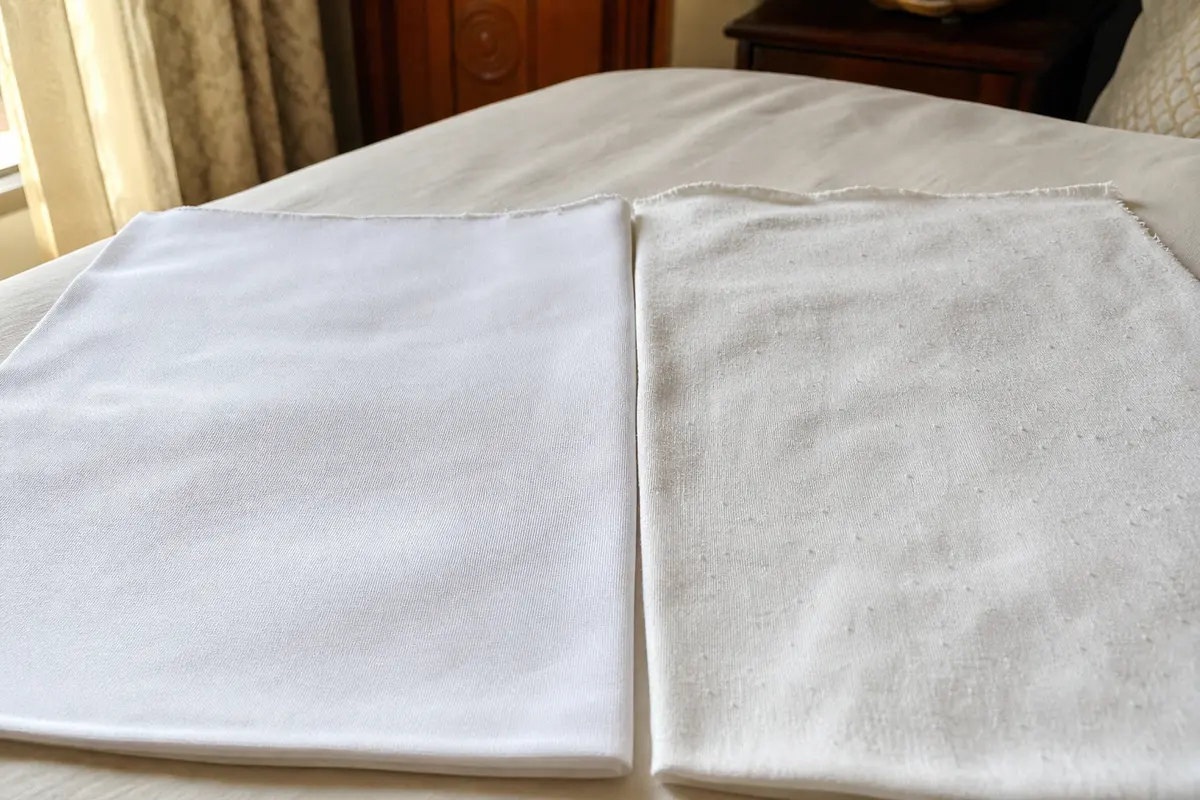
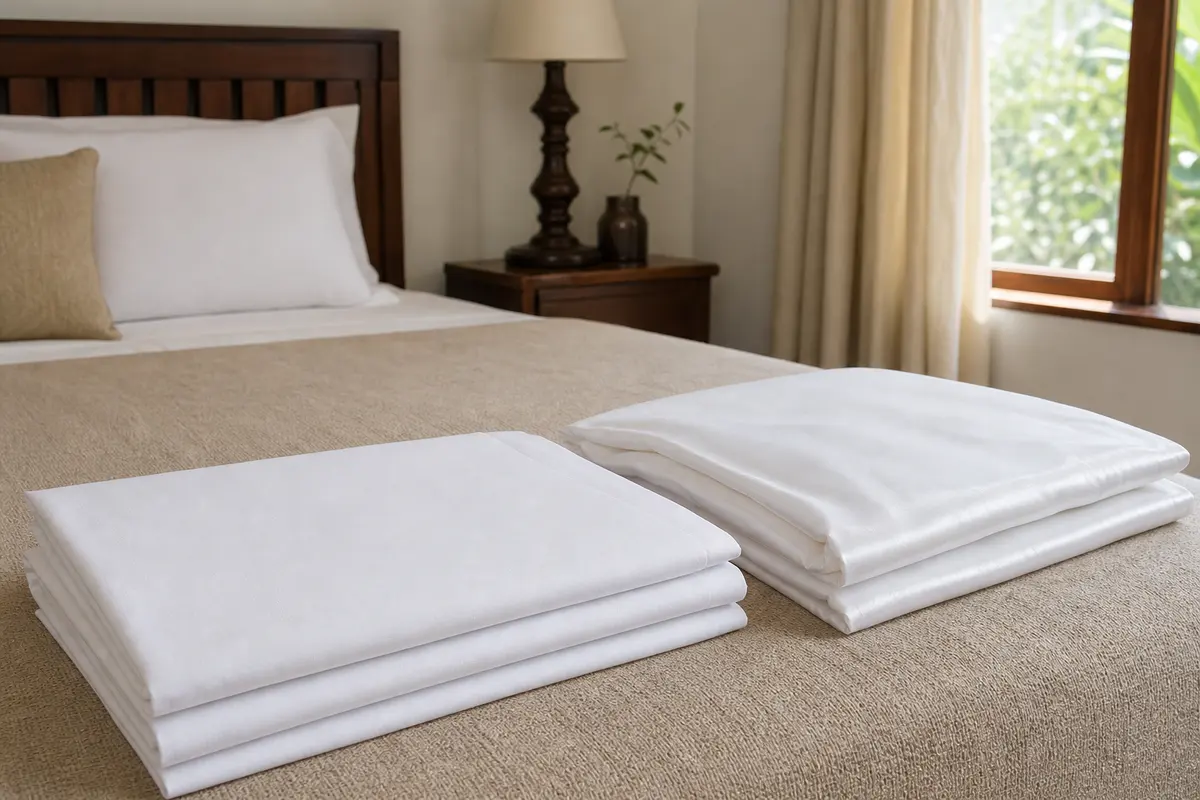
Two common cotton weaves
Weave
How it is woven
Typical feel
Percale
One thread over, one under
Crisp, cool, matte
Sateen
Several threads over, one under
Smooth, with a soft sheen
03Cotton: all you need to know
What makes a pure cotton bedsheet different from other sheets?
A pure cotton bedsheet is made only from cotton fibre, with no polyester or other fibre mixed into the yarn. That single fact explains most of how it behaves on the bed.
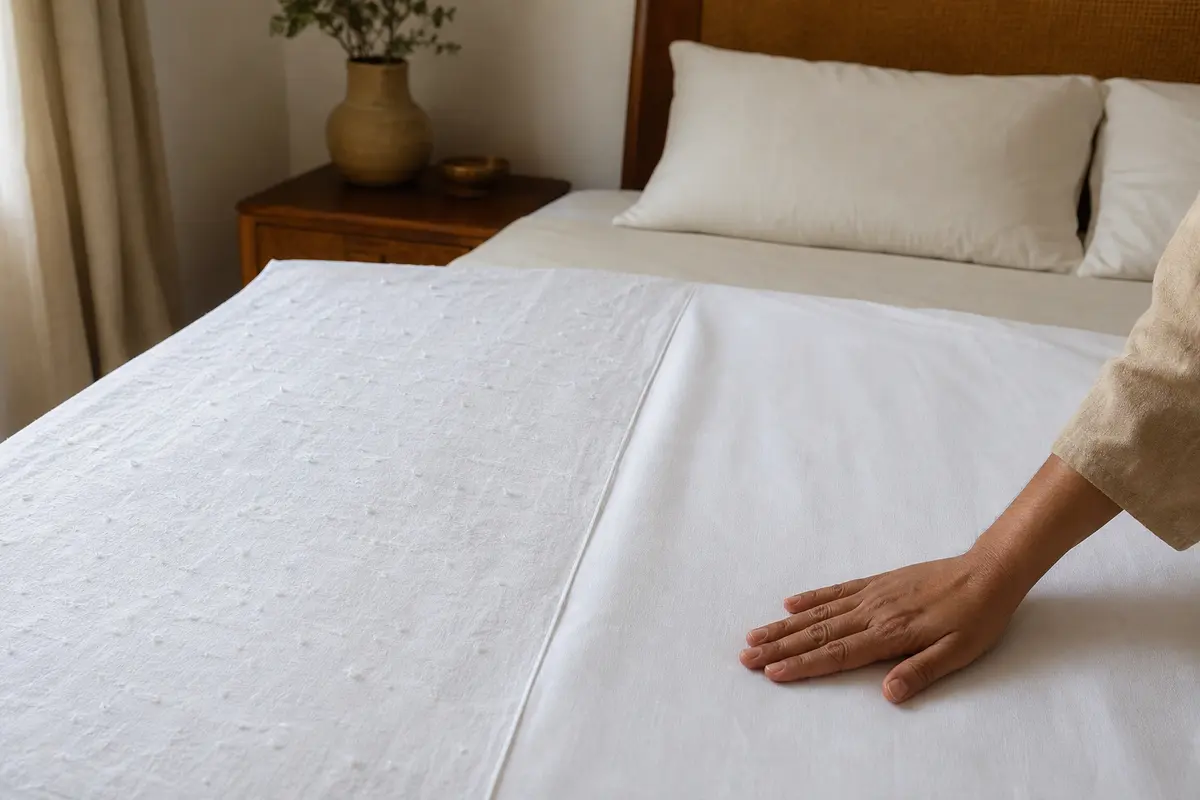
Cotton fibre is hollow and thirsty. It takes in moisture from the body and lets it pass out into the air, so the sheet does not feel sticky on a warm night. It also has a dry, matte, slightly textured touch, which many people simply call the "cotton feel". A sheet with polyester in it feels smoother and a little slippery by comparison.
The same nature brings some extra work. An all-cotton sheet creases when you sleep on it and when it comes out of the wash. It holds more water, so it is heavier on the line and slower to dry. It can also shrink a little in the first few washes. If you like a fresh, airy bed and do not mind a few creases, this is the trade you are making.
Which type of cotton is good for bedsheets?
Cotton with longer fibres generally makes a smoother and stronger bedsheet than cotton with short fibres. The length of the fibre is called the staple, so you will see words like "long staple" or "extra-long staple" on some labels.
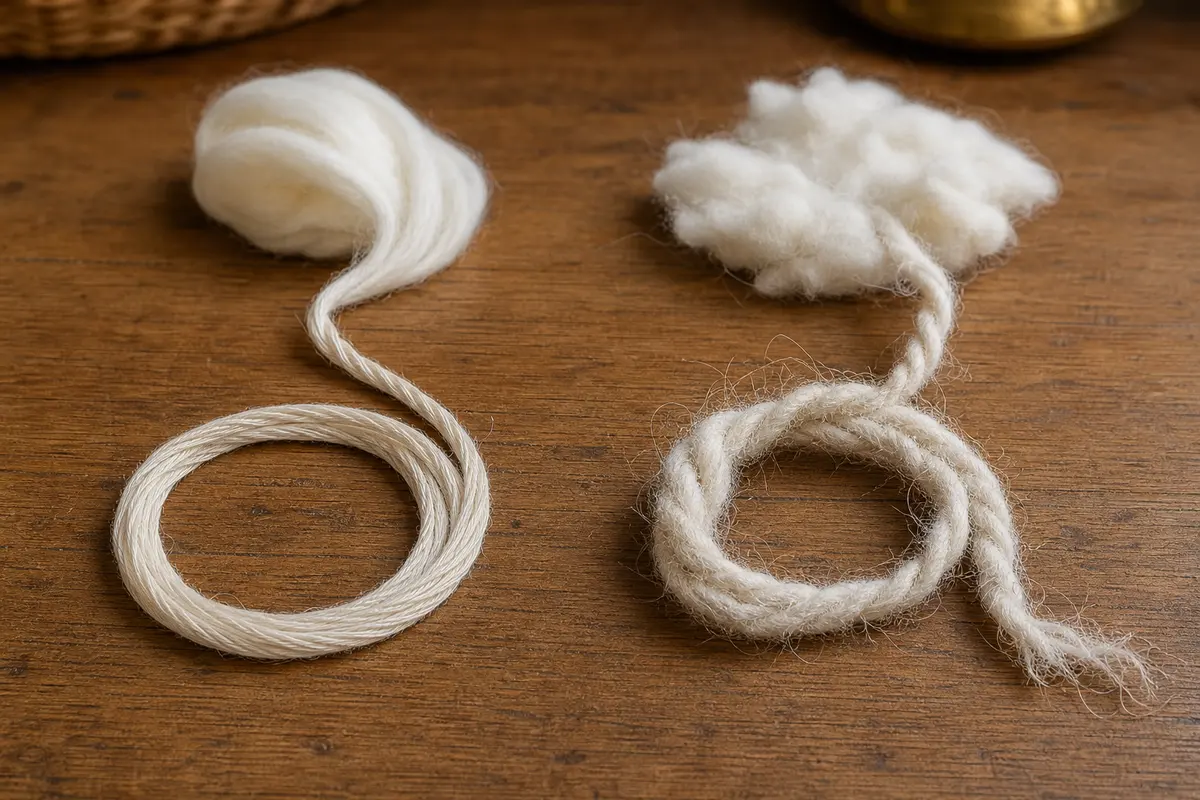
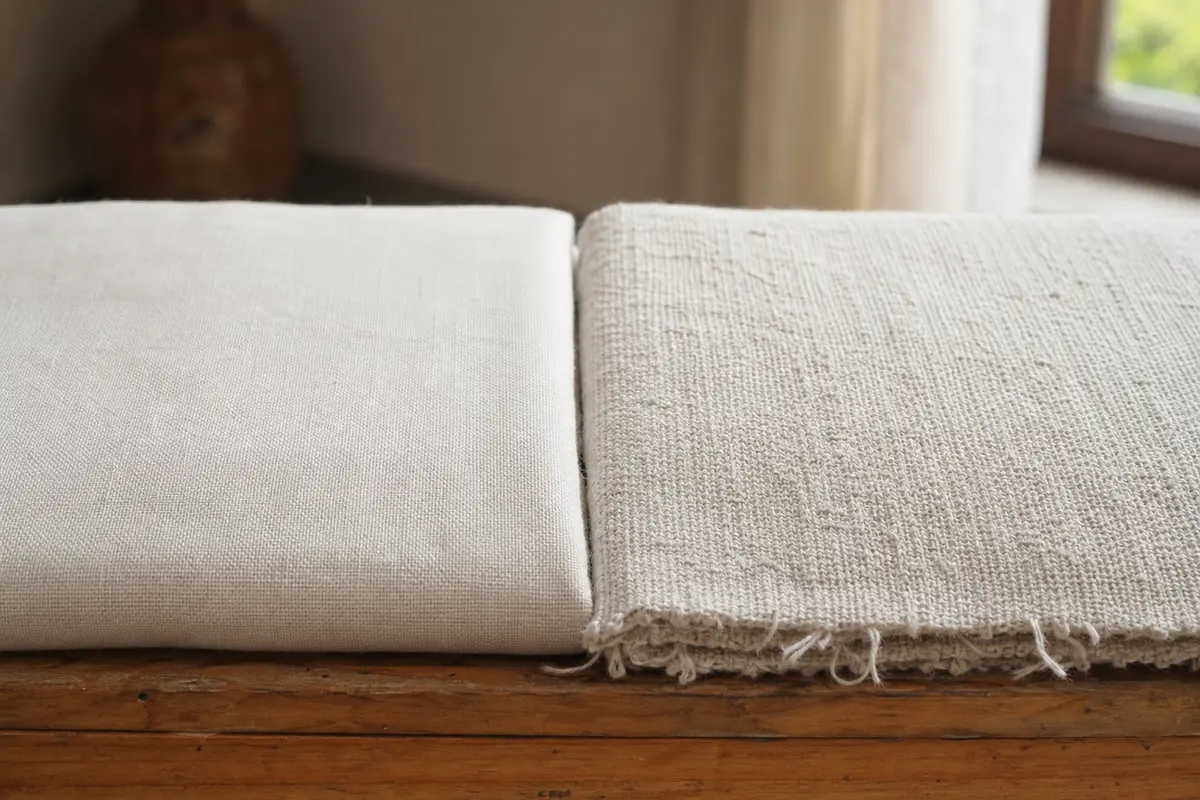
Long fibres can be spun into fine, even yarn with fewer loose ends sticking out. Fewer loose ends means a smoother surface, less fuzz and fewer small balls of fibre forming with use. Short-staple cotton gives a thicker, hairier yarn. It is perfectly usable for everyday sheets, but it feels coarser and may look worn sooner.
Names of cotton varieties on a label tell you where the fibre is said to come from, not how well the sheet was made. A good variety can still be woven loosely or finished poorly. So read the full details: the stated composition, the weave and the weight or density of the cloth. Where a seller does not mention the staple, judge by the close-up photos and by how the fabric is described.
Combed cotton vs carded cotton: what is the difference?
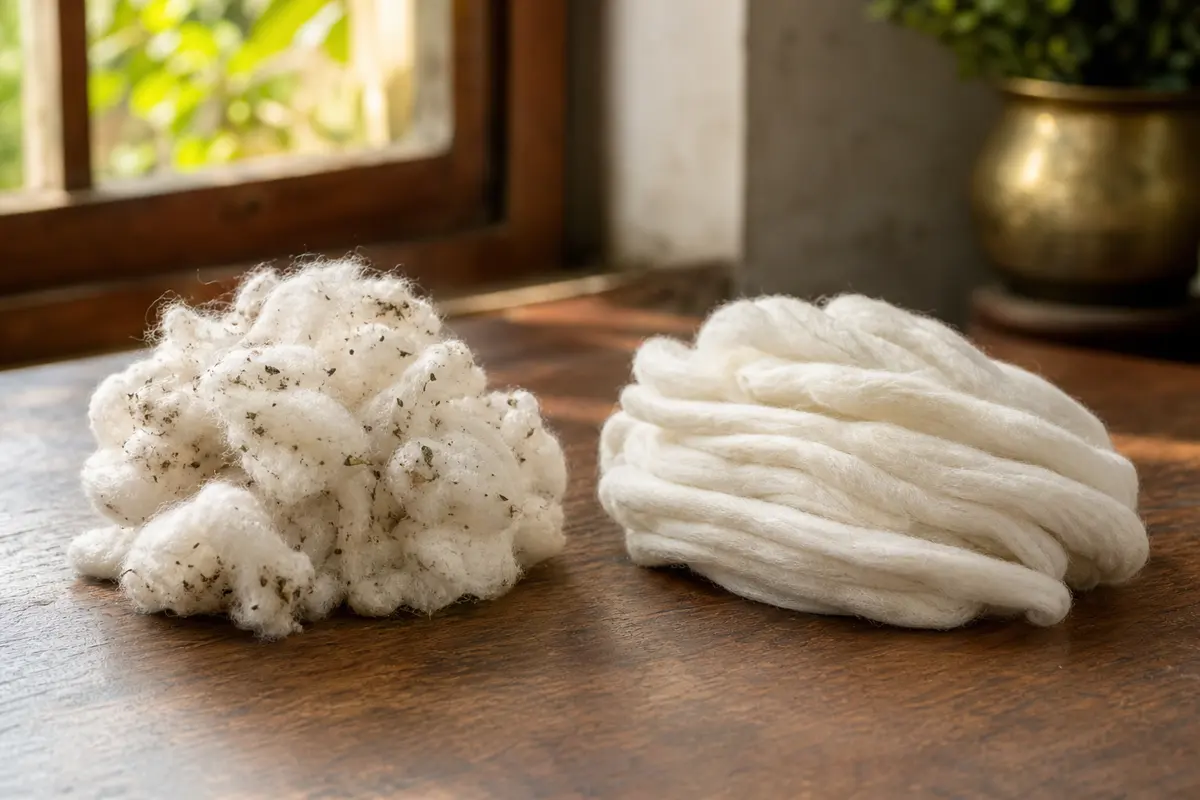
Combed cotton has gone through one extra cleaning step that carded cotton has not, and this makes its yarn smoother and stronger.
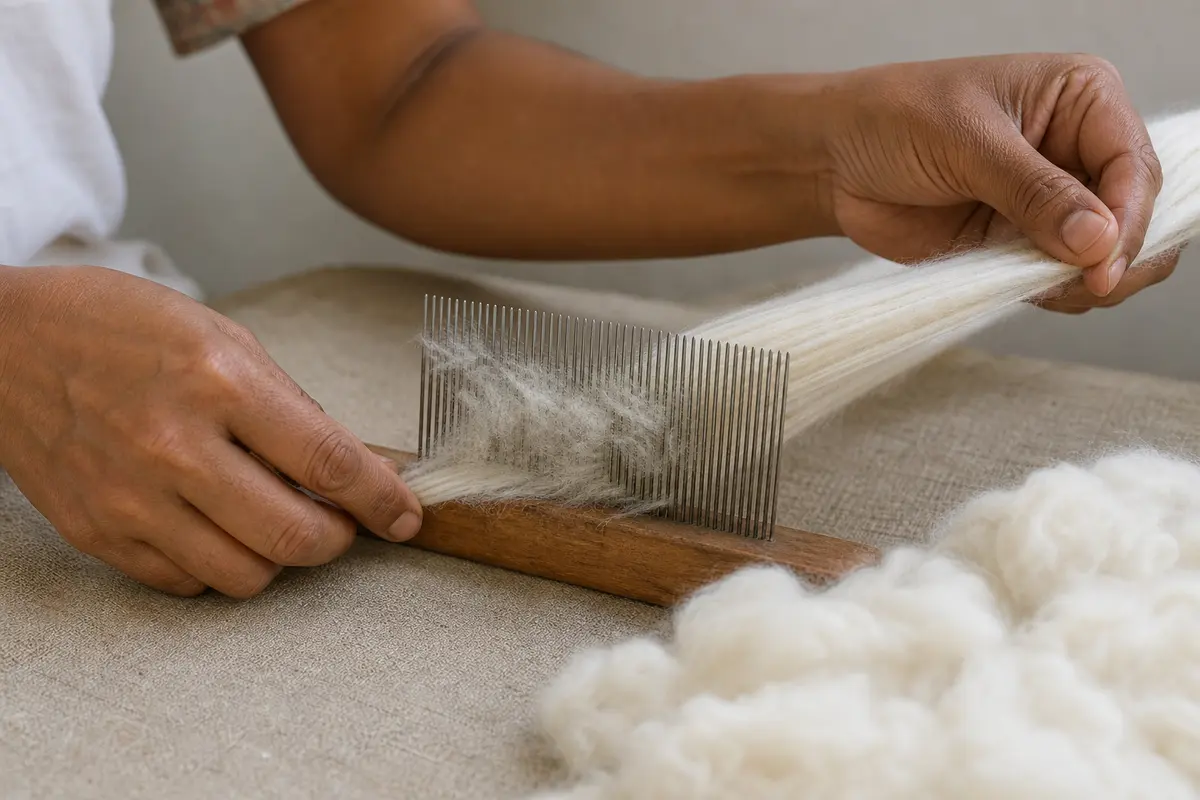
All cotton is first carded. Carding opens up the raw fibre, removes bits of leaf and seed, and lays the fibres roughly in one direction. For basic yarn the process stops here. For combed cotton, the fibre is then passed through fine combs that pull out the shortest fibres and any remaining specks. What is left is longer, cleaner and lies more evenly.
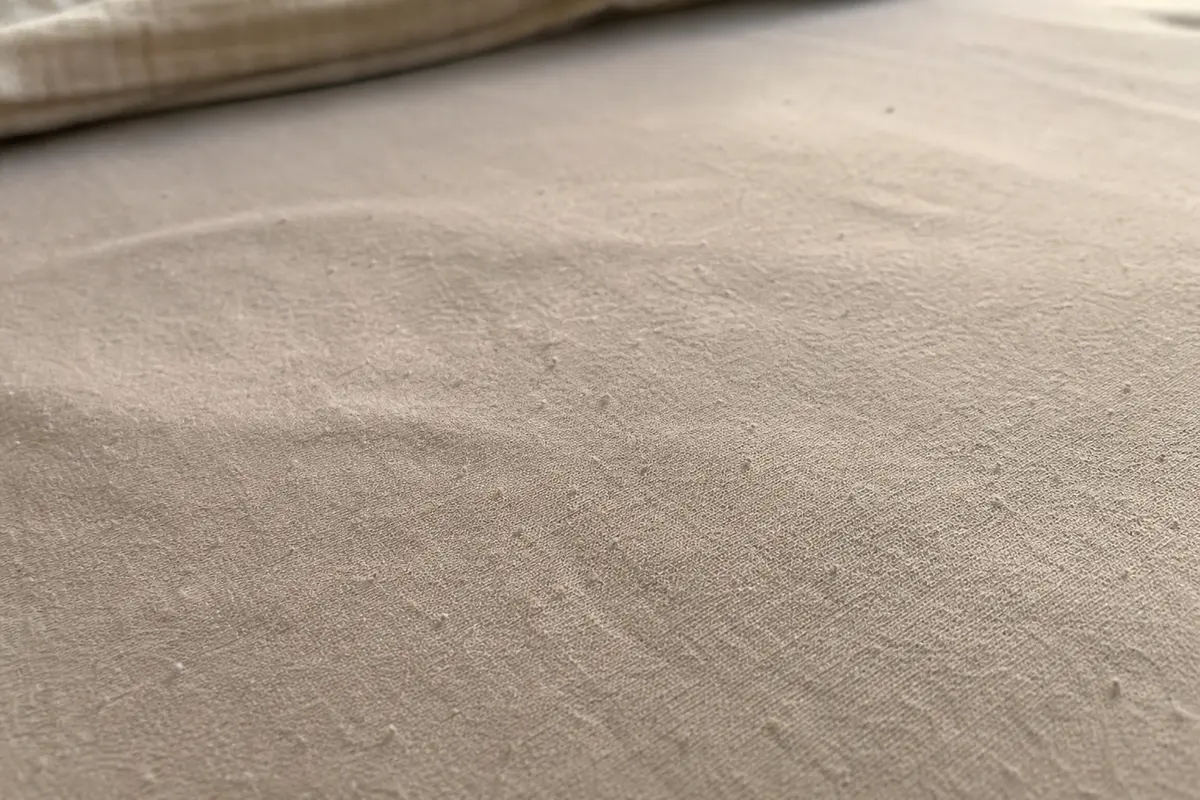
On the bed, a combed cotton sheet feels smoother against the hand, sheds less fluff in the first washes and is slower to form small fibre balls. A carded cotton sheet feels a little more rustic and textured, which some people like for daily use.
Sellers usually mention "combed" when the yarn is combed, because it is a selling point. If the word is missing, it is safer to assume the yarn is carded, and to check the other details of the product more carefully.
Why do some cotton bedsheets feel rough and others smooth?
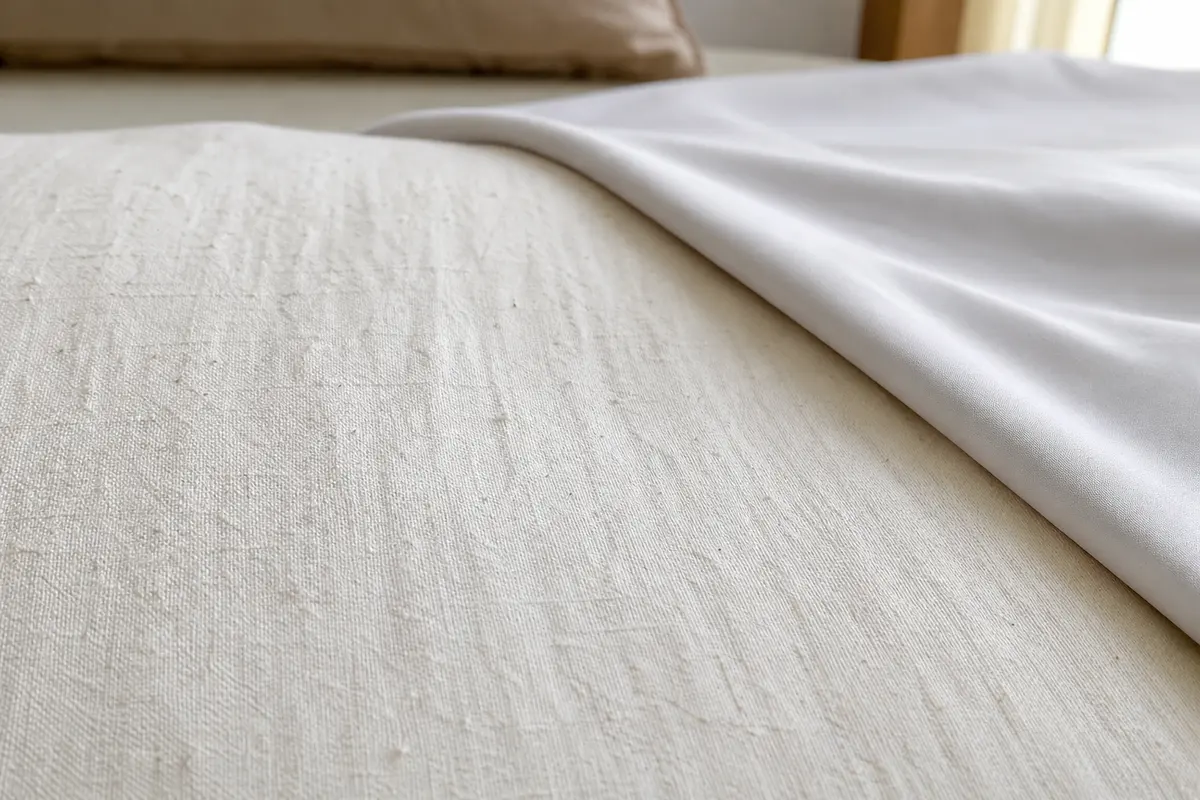
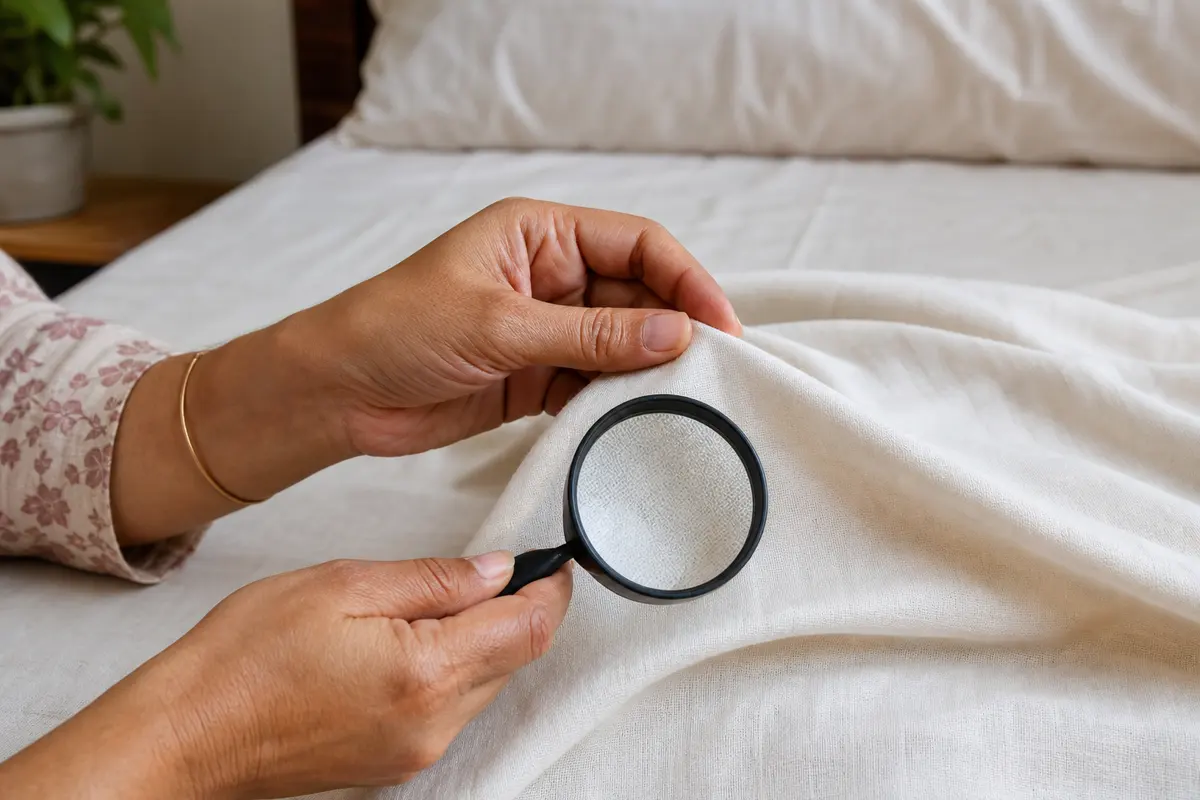
Cotton bedsheets feel different because of the yarn, the weave and the finish, even when the label on each says the same fibre.
Start with the yarn. Thin, even yarn spun from long fibres gives a fine, smooth cloth. Thick yarn spun from short fibres gives a heavier, grainier cloth. Then comes the weave, which is the pattern in which the threads cross. A plain, tight weave feels crisp and cool. A weave that lets threads lie over one another for longer stretches feels silkier and has a soft shine.
The last part is the finish. After weaving, fabric may be singed to burn off surface fuzz, pressed between rollers for smoothness, or treated so it takes colour more deeply. Some finishes wash out over time, which is why a sheet can feel different after a month.
A new sheet may also carry starch or sizing from the mill. This makes it feel stiff or papery at first. It usually relaxes after the first few washes.
Do cotton bedsheets fade or pill over time?
Yes, cotton bedsheets can slowly fade and may form a little fuzz with long use, but how much depends on the dye, the yarn and how the sheet is washed.
Fading comes mostly from three things: strong detergent, hot water and harsh direct sun. Dark and bright colours show it first. Washing the sheet inside out, using a mild detergent and drying it in shade or with the reverse side facing the sun all slow the loss of colour. It is also normal for a new dark sheet to release some extra dye in its first washes, so wash it separately at the start.
Pilling means small balls of fibre forming on the surface. Cotton pills less than many synthetic fabrics, because loose cotton fibres tend to break off and wash away instead of clinging. Sheets made from short, loosely spun fibres pill more. Rubbing against rough surfaces, overloading the machine and washing with towels or heavy clothes make it worse.
What are the disadvantages of cotton bedsheets?
The main disadvantages of cotton bedsheets are creasing, slow drying, some shrinkage and the need for a little more care than synthetic sheets.
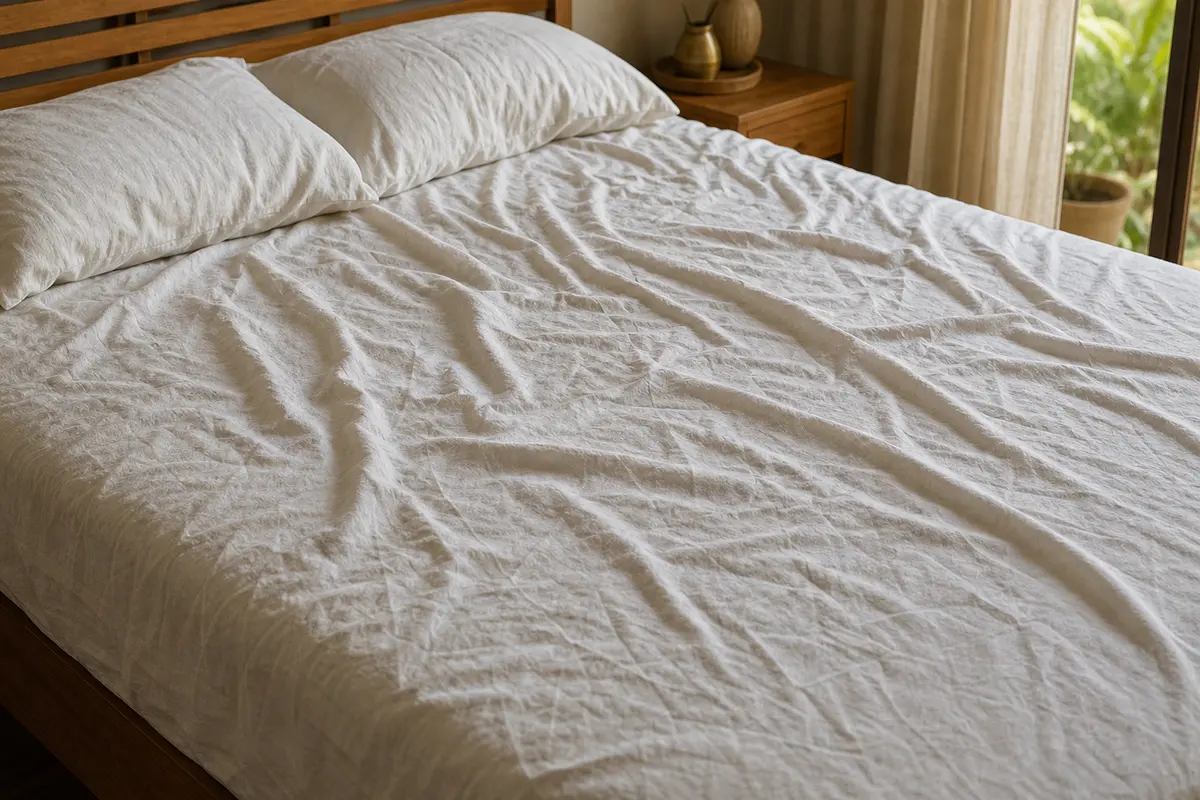
Cotton creases easily. A sheet that looked neat at night can look rumpled by morning, and it usually needs ironing if you want a crisp bed. Folding it while slightly damp and smoothing it by hand reduces the work.
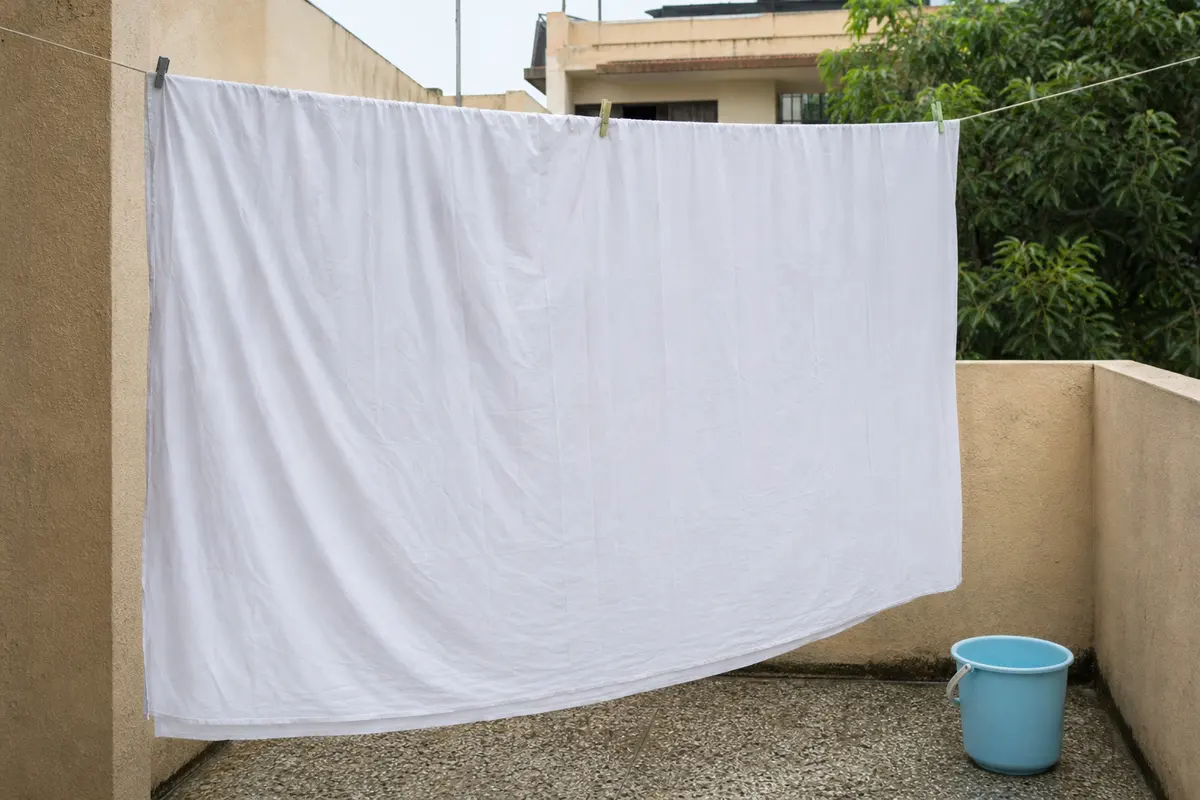
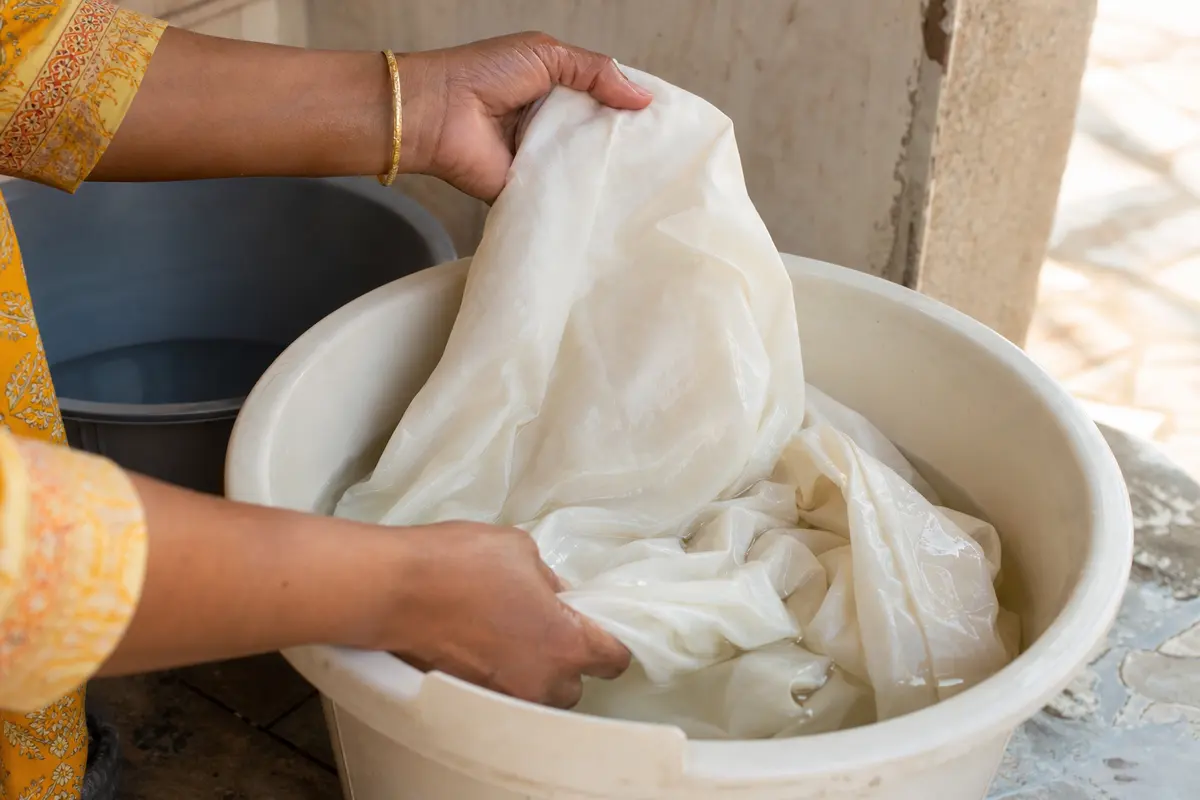
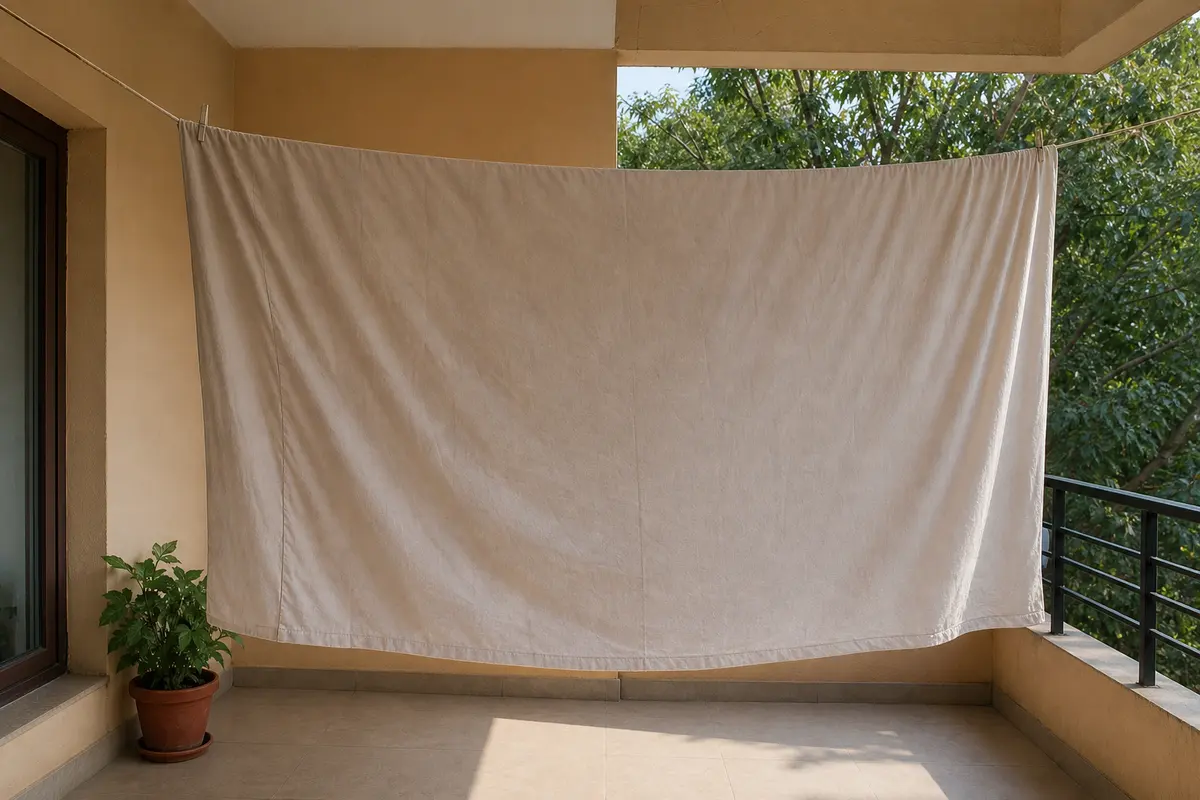
Cotton also holds a lot of water. In the monsoon, a thick all-cotton sheet can take a long time to dry indoors and may pick up a musty smell if it stays damp. Spread it fully under a fan, and never fold or store it until it is completely dry.
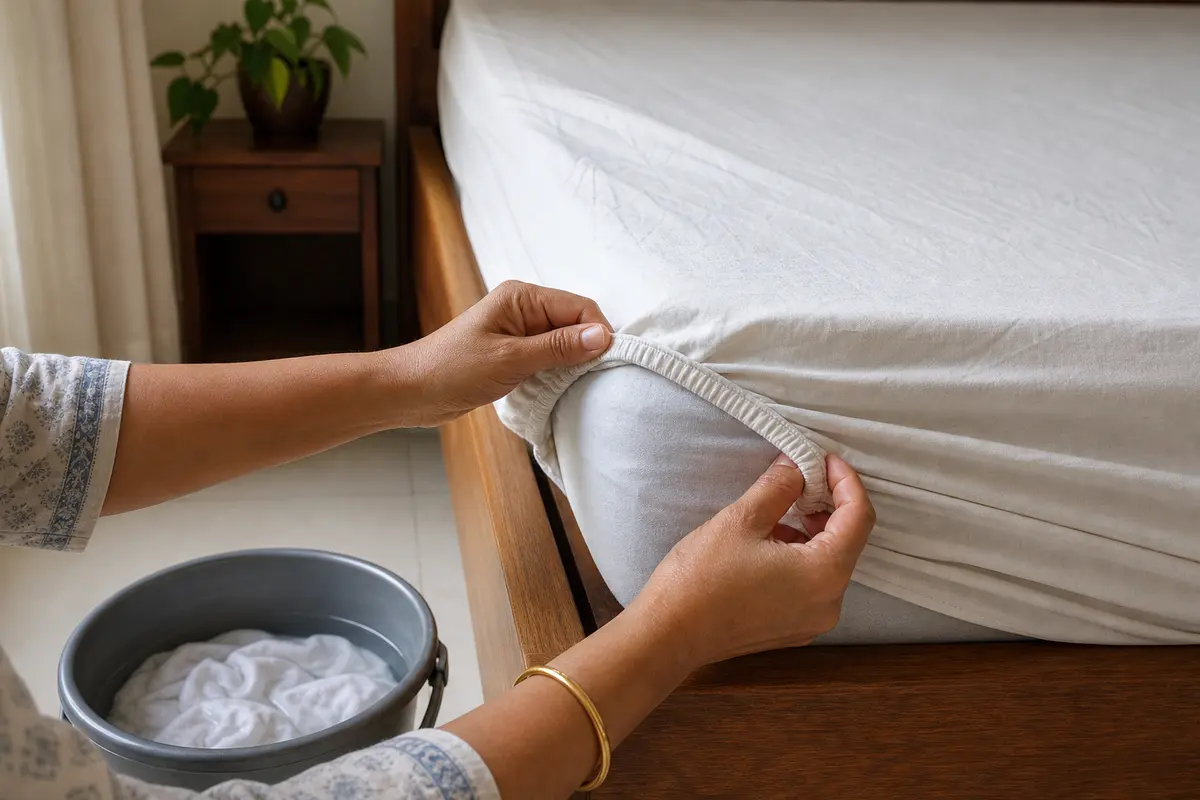
Then there is shrinkage. Many cotton sheets tighten slightly in the first washes, which matters most for fitted sheets. Washing in cool or lukewarm water helps.
None of these are faults in the fabric. They come from the same thirsty fibre that makes a cotton sheet comfortable in warm weather.
The pictures in this article are illustrations made to explain each point. They are not photographs of Hayiga products.
04When should you use it?
What it is made from
Soft fibres picked from the cotton plant are cleaned, spun into yarn and woven into cloth. Longer fibres make smoother, stronger yarn. Because it comes from a plant, cotton is called a natural fibre.
How it feels
Cotton can feel crisp and matte or smooth and soft. The feel comes from the yarn, the weave and the finish, so two cotton sheets can feel quite different from each other.
In heat and humidity
Cotton lets air pass and absorbs moisture, so many people find it comfortable in hot weather. In the monsoon it can take longer to dry than synthetic fabrics.
Creasing
Pure cotton creases easily, more so after a machine wash. Shaking the sheet out and hanging it straight helps. Ironing while it is slightly damp makes it smoother.
Durability
Cotton is hard-wearing and becomes stronger when wet, so it handles regular washing well. Most cotton sheets grow softer with each wash.
Care
Usually machine washable in cool or lukewarm water with a mild detergent. Dry in shade to protect the colour. Always follow the care label on the product.
05Before you buy
✓Whether the product's details say 100% cotton or a blend with another fibre
✓The weave or finish, if stated, such as percale or sateen
✓The thread count, if stated, compared only with sheets of the same fibre and weave
✓The sheet's measurements against your mattress length, width and height
✓The care instructions, including water temperature and drying advice
✓Whether pillow covers are included and how many
✓Whether the colour is printed or dyed, and any first-wash advice given
Common questions
Will cotton sheets shrink?+−
Cotton sheets can shrink a little in their first few washes, especially in hot water or a hot dryer. The shrinkage is usually small. To keep it low, wash in cool water, avoid high heat when drying, and follow the care label on the product. Some cotton fabrics are treated at the mill to reduce shrinkage, but this varies by maker.
What is cotton fabric made from?+−
Cotton fabric is made from the soft, fluffy fibre that grows around the seeds of the cotton plant. The fibre is picked, cleaned, combed and spun into yarn. The yarn is then woven or knitted into cloth, and the cloth is dyed or printed. Because the fibre comes straight from a plant, cotton is called a natural fibre.
Is cotton good for summer in India?+−
Many people find cotton comfortable in the Indian summer. Cotton lets air pass through and absorbs sweat, so the sheet does not feel sticky against the body. A lighter, plain-woven cotton sheet usually feels cooler than a thick or very dense one. How cool any sheet feels also depends on your room, your fan or AC, and how you sleep.
Why do cotton bedsheets crease so much?+−
Cotton fibres bend and hold that bend when they are wet and then dry, which shows as creases. Spinning in a washing machine and drying in a heap make it worse. To reduce creases, take the sheet out soon after the wash, shake it well and hang it straight. Ironing while the sheet is still slightly damp gives a smoother result.
Do cotton bedsheets get softer after washing?+−
Yes, most cotton bedsheets become softer with use and washing. New sheets often carry a finish from the mill that can feel a little stiff. As this washes out and the fibres relax, the fabric feels softer. Gentle washing with a mild detergent helps. Harsh detergent, bleach and very hot water can make cotton feel rough over time.
What does 100% cotton mean on a bedsheet label?+−
It means the fabric is made only from cotton fibre, with no polyester or other fibre mixed in. It does not tell you the weave, the thickness or how soft the sheet is. Two sheets marked 100% cotton can feel very different. For a fuller picture, also read the weave, the thread count if stated, and the care instructions in the product's details.
How long do cotton bedsheets take to dry in the monsoon?+−
It depends on the thickness of the sheet and how damp the air is. In the monsoon a cotton sheet can take a day or longer to dry indoors, because cotton holds more water than synthetic fabrics. Spin it well, spread it fully open under a fan, and do not fold it until it is completely dry. Folding it damp can cause a musty smell.
Is cotton warm enough for winter and AC rooms?+−
A cotton bedsheet on its own gives very little warmth, because it is a thin single layer. In an AC room or on mild winter nights, most people add a cover such as a dohar, quilt or comforter. Cotton works well as the layer next to the body under these covers, since it lets air pass and absorbs moisture.