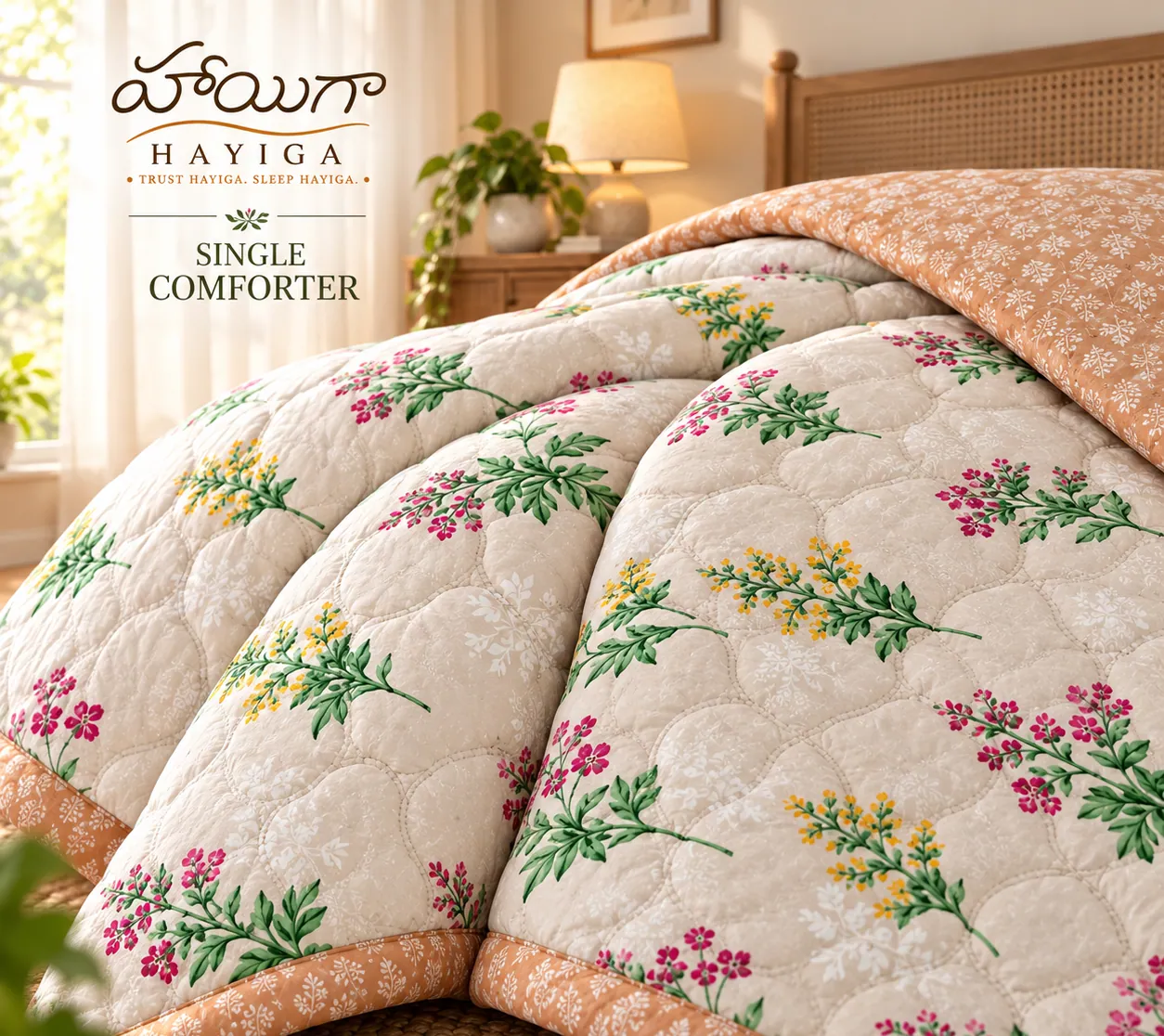
How do you know how warm a comforter will be before buying?
You can judge the warmth of a comforter from three things in the listing: the weight or GSM of the filling, the kind of filling, and the words the seller uses for the season. No single number tells the whole story, so read all three together.
A higher filling weight usually means a fuller and warmer comforter of the same type. GSM is explained in its own guide on this site. Compare numbers only between similar products, because different fillings trap heat differently.
Sellers often describe a comforter as light, all-season or winter weight. Treat these words as a rough guide. Then look at the photos. A comforter that looks flat and folds small is a light one. One that looks puffy and stands tall is made for colder nights.
Match this to your own room. Think of the coldest night you expect and how cool you keep the AC. If the listing does not give enough detail, check the product's details again or ask the seller before you order.
How to choose a comforter for a couple who feel different temperatures
When two people feel heat and cold differently, two single comforters often work better than one large one. Each person gets the warmth they want, and nobody loses the cover at night.
This is a common problem in Indian homes. One partner wants the AC colder, the other feels chilly, and a shared comforter becomes a nightly tug. With two singles, one person can use a light comforter and the other a warmer one, on the same bed.
If you prefer the look of one large comforter, choose a lighter weight that suits the warmer sleeper. The person who feels cold can add a thin layer on their side. It is easier to add a layer than to cool down under a cover that is too warm.
Size matters here too. A shared comforter should be wide enough to cover both people with some cloth to spare on each side, so that turning in sleep does not uncover the other person.
Talk it over at home before buying. It saves a second purchase later.
Does a comforter need a cover or a top sheet?
A comforter does not need a separate cover, because it is made to be used as it is. A top sheet between you and the comforter is still a good habit, as it keeps the comforter clean for much longer.
The reason is simple. A comforter is bulky. It takes up the whole washing machine, and it dries slowly, mainly in humid weather. A thin top sheet takes the sweat and body oil instead. You wash the sheet every week with the rest of the bedding, and the comforter needs washing far less often.
Some people do put a comforter inside a duvet cover. This works if the sizes match, and it gives you a new look without buying a new comforter. If you plan to do this, compare the measurements of both pieces first.
When you choose a comforter, decide which way you will use it. If it will be used without a cover, the feel of the outer fabric matters more, because it touches your skin every night.
How to check the quality of a comforter
A good quality comforter has even filling, firm stitching that holds the filling in place, a soft outer fabric and neatly finished edges. You can check most of this with your hands in a minute.
Spread the comforter flat and press along it with your palms. The filling should feel the same everywhere. Thin patches, hard lumps or empty corners are signs that the filling has shifted or was not spread well.
Look at the stitched pattern across the surface. These lines or boxes hold the filling where it belongs. The stitches should be small and unbroken. Rub the outer fabric and check the seams. No filling should be poking through the cloth or coming out at the stitches.
Then check the border. A piped or bound edge with flat corners usually lasts longer than a plain turned edge.
Online, look for close-up photos of the stitching and the edge, and read what the outer fabric and filling are made of. Check the product's details for anything that is not stated.
Which comforter colour and design is practical for daily use?
For daily use, a mid-tone or printed comforter is the most practical, because it hides small marks and still looks fresh between washes. Very light plain colours show every mark, and a comforter is not something you want to wash every week.
Remember that the comforter covers most of the bed, so it decides how the whole room looks. A design that goes with two or three of your bedsheets is more useful than one that matches only a single set.
Reversible comforters, with a different colour or print on each side, give you two looks from one piece. This is handy when you want a change, or when one side picks up a mark before washing day.
Dark, rich colours look smart, but need a little more care to stay that way. Wash them separately at first and dry them in shade.
Colours can look different on a screen, so look at all the photos and read the colour name before you choose.
How long does a comforter last, and when should you replace it?
There is no fixed life for a comforter; it depends on the filling, the stitching, how often it is used and how it is washed and stored. A well-kept one can serve for several years, so it is more useful to watch for signs of wear than to count years.
A comforter is ready to be replaced when the filling has gone flat and no longer springs back after airing, or when it has gathered into lumps that do not spread out. Other signs are thin, see-through patches, broken stitching that lets the filling move, and outer fabric that has become rough or torn.
If you feel colder under the same comforter than you did last winter, the filling has probably lost its loft.
You can slow this down. Use a top sheet, follow the care label on the product, dry it fully before storing, and avoid keeping it pressed under heavy things for months.
Knowing these signs also helps when you buy a new one. Look for strong stitching and even filling.